How Ukraine’s Wildberries Strikes Disrupted 50 St. Petersburg Airport Departures
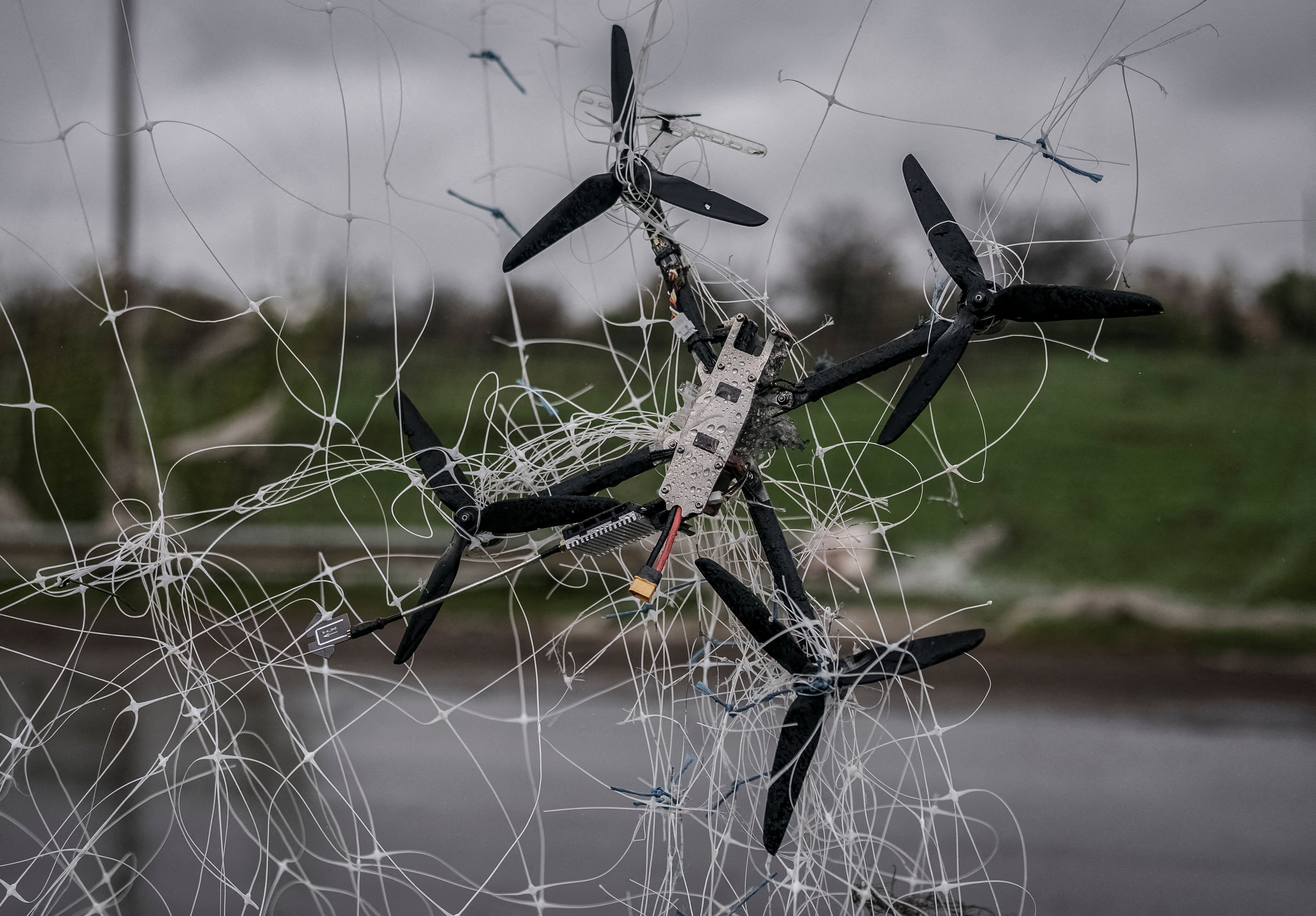
Reported Ukrainian drone strikes hit Wildberries logistics facilities in St. Petersburg and Simferopol on July 24, 2026, while the associated airspace risk temporarily halted flights at St. Petersburg’s Pulkovo Airport and disrupted approximately 50 departures. Wildberries CEO Tatyana Kim said two facilities around St. Petersburg and one in Simferopol were hit; airport operations resumed at about 6 a.m. local time. The interruption shows how a long-range drone campaign can impose a measurable aviation consequence beyond the facilities directly affected.
Kim said personnel were rapidly evacuated and that preliminary information indicated no casualties at the three Wildberries locations. Smoke was observed over St. Petersburg, with a substantial fire continuing at at least one facility hours after the reported strike. The company temporarily suspended operations at affected logistics sites.
The central aviation issue is not whether the airport itself was targeted. No such claim is established here. The operational problem is that aircraft cannot safely depart or arrive while authorities consider the surrounding airspace exposed to an unresolved aerial threat. A temporary suspension reduces traffic in that uncertain environment, but it also begins accumulating aircraft, passengers and crew that must be worked back into the schedule after restrictions lift.
A short closure can create a longer recovery
Pulkovo’s reopening at roughly 6 a.m. marked the end of the immediate suspension, not necessarily the end of its operational effects. Approximately 50 disrupted departures represent aircraft that may require new slots, passenger processing and revised ground-service timing. Crews and airplanes scheduled to continue to other destinations can also arrive late to subsequent assignments.
That is why airport disruption can exceed the duration of an airspace restriction. An airport has finite runway, gate and ground-handling capacity. Once departures accumulate, operators cannot release every delayed aircraft simultaneously. The system must recover in sequence while maintaining separation, servicing aircraft and fitting arriving traffic back into the flow.
From a safety-management perspective, suspending operations is a conservative response to uncertainty rather than proof that defenses failed or that airport infrastructure was damaged. The confirmed facts establish a temporary closure and about 50 affected departures. They do not establish the precise threat picture considered by authorities, the specific restrictions imposed around the airport or the individual causes of each delay.
Long reach increases the number of systems under pressure
St. Petersburg is more than 800 kilometers, or 500 miles, from the Ukrainian border. That distance is significant because it demonstrates the geographic reach attributed to the campaign, although it does not disclose where individual aircraft originated or how they traveled. The relevant systems consequence is broader: long-range operations can force simultaneous decisions across air defense, civil aviation and emergency response networks far from the border.
The July 24 incident was the third reported overnight attack involving Wildberries facilities within six days. Repeated operations matter differently from a single event. They require continued alerting, repeated airspace decisions and recurring emergency-response readiness, while logistics operators must manage evacuations, fire damage and displaced distribution work. This does not establish how much of Wildberries’ overall capacity was lost, but it does show how recurrence can turn localized incidents into a continuing resilience problem.
Russia’s defense ministry claimed that approximately 571 drones were intercepted overnight across more than a dozen regions and Crimea. That figure was not independently verified, so it should not be treated as a confirmed measure of the attack’s size or air-defense performance. Interception claims alone also cannot establish how many drones were launched, how many malfunctioned or how many reached intended destinations.
Even as an attributed figure, however, the claim illustrates the scale of readiness Russia said it faced. Sustained detection, identification and response across numerous regions place demands on personnel, sensors, command networks and interceptor inventories. The available information does not support a reliable calculation of interception efficiency or comparative production capacity on either side.
Military-supply claims remain unverified
Ukrainian President Volodymyr Zelensky characterized the Wildberries operation as “successful” and alleged that the retailer supplied Russia’s military with drone components, navigation equipment, and military gear. That allegation was not independently substantiated in the available reporting and should not be presented as an established description of the warehouses’ contents or function.
The strongest verified conclusion is narrower but still consequential. Reported strikes reached logistics facilities more than 800 kilometers from the border, prompted evacuations and fires, and coincided with an airport suspension affecting roughly 50 departures. For aviation operators, that is the practical warning: autonomous-aircraft threats can produce disruption without physically striking an airport. The resulting burden falls across airspace management, airline recovery, emergency response and regional readiness and careful attribution remains essential when wartime claims extend beyond those observable effects.
By Stephen Wallace — Editor for AMI’s aerospace integration and unmanned mobility coverage, focused on drone manufacturing, VTOL systems, autonomous networks, and air-ground mobility links.