Four-Ton SpaceX Falcon 9 Hits Moon, Telescope Detects Sodium and Lithium
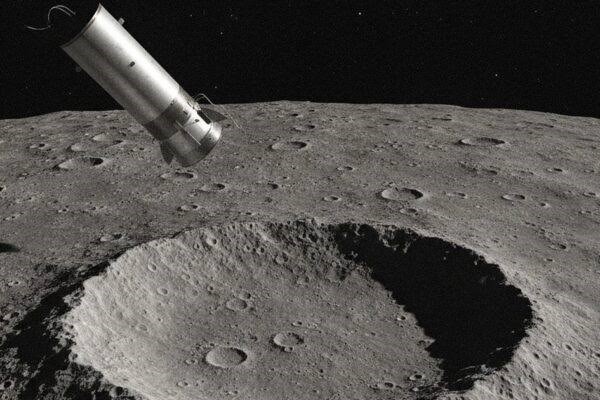
A spent SpaceX Falcon 9 upper stage weighing about 4,000 kilograms struck the Moon at approximately 06:35 UTC on August 5, 2026. The uncontrolled impact created a fresh surface disturbance and a plume in which astronomers detected sodium and lithium, turning old mission hardware into an unplanned materials experiment. NASA had tracked the stage and prepared instruments to observe the collision, which posed no danger to Earth.
What scientists obtained was not a clear, close-up view of the moment of impact. Instead, they assembled the event from two different forms of evidence: before-and-after orbital imagery showing a changed surface, and ground-based spectroscopy identifying chemical signatures in the ejecta. That distinction matters because the crater’s exact dimensions and the origin of every detected element have not yet been established.
Orbital images located the disturbance
South Korea’s Danuri lunar orbiter passed over the area soon after the collision. Images released by the country’s space agency showed a darker patch at the reported impact location when compared with earlier views, providing evidence of altered terrain and dispersed ejecta.
The imagery confirms a new disturbance at the expected site, but it does not provide a confirmed crater measurement in the available findings. Before impact, astrophysicist Sara Webb estimated that the collision might excavate a crater about 20 meters wide and 5 meters deep. NASA separately projected a feature approximately 60 feet wide and 12 feet deep. Those were predictions based on impact models, not final measurements of the resulting crater.
The distinction is more than technical bookkeeping. Crater size depends on factors including the stage’s impact orientation and the properties of the material it struck. Follow-up orbital imaging can test those models and help determine how a large, hollow rocket body behaves differently from a compact natural meteoroid.
Spectroscopy found chemical fingerprints in the plume
The European Southern Observatory’s Very Large Telescope in Chile supplied the event’s chemical evidence. It detected spectral lines associated with sodium and lithium gas for roughly five to 10 minutes after impact. Astronomer Carl Schmidt estimated that the plume extended a few tens of kilometers.
Sodium probably came from lunar soil, according to Schmidt. Lithium may have originated in the Falcon 9 stage, but that connection remains an attribution rather than a definitive identification. Spectroscopy can show that an element was present in the observed plume; proving its source requires separating spacecraft material from the lunar regolith excavated by the collision.
Geometry helped make the measurement possible. The stage hit near the lunar terminator, the boundary between daylight and darkness. Sunlight briefly illuminated ejected dust above the surface, even though the impact itself was difficult to observe from Earth and was not a naked-eye event. The resulting plume offered a short window in which a ground telescope could examine freshly excavated material.
A disposal problem became a tracking test
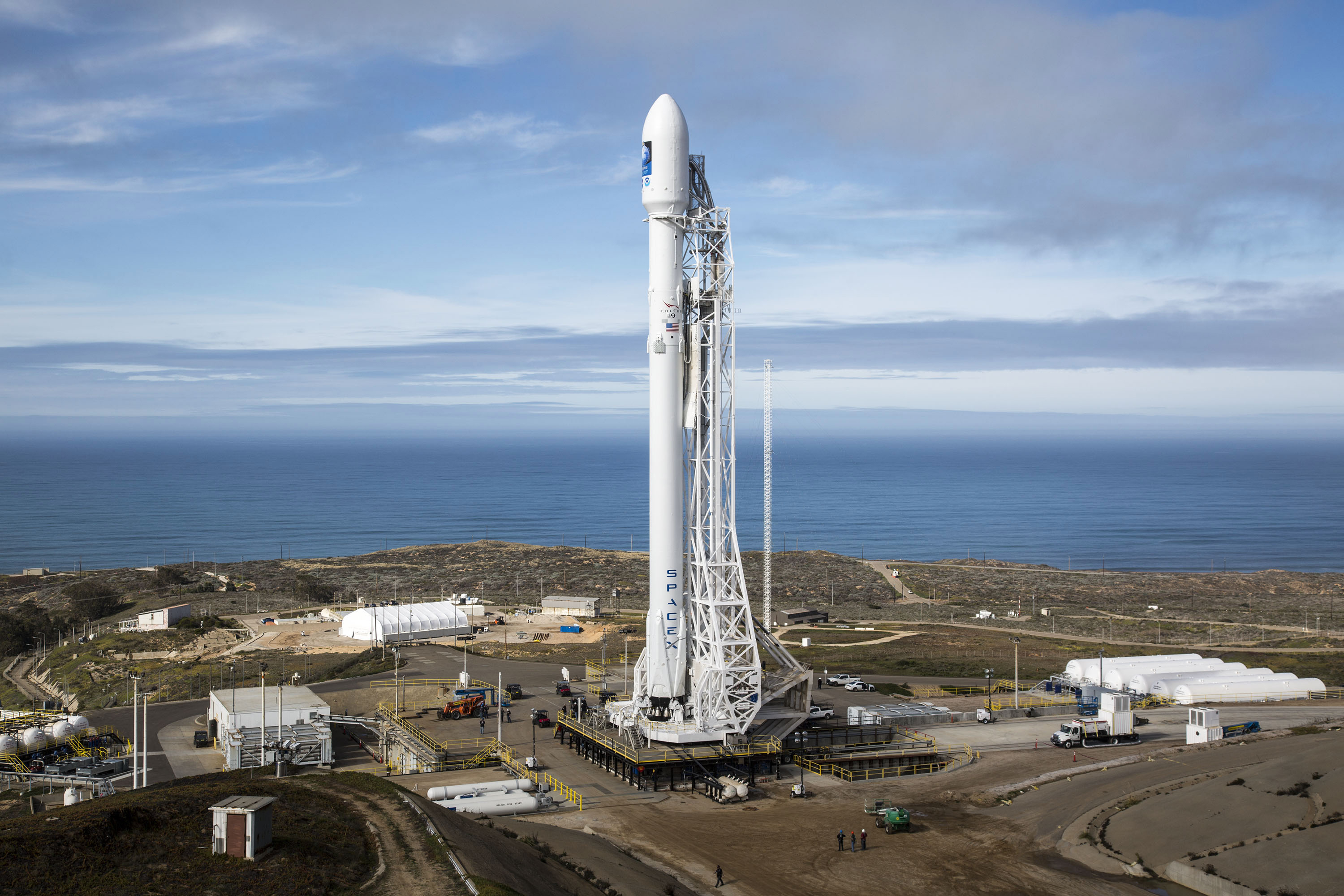
The upper stage had launched in January 2025 to send two commercial landers toward the Moon. Falcon 9’s reusable first-stage booster returned to Earth, but the expendable upper stage remained in a looping trajectory shaped by the gravity of Earth, the Moon and the Sun. SpaceX director Julianna Scheiman attributed its eventual collision course to a combination of solar activity and gravitational forces.
High-energy lunar missions present a different disposal problem from launches to low Earth orbit. An upper stage that uses most of its available propellant to send payloads toward the Moon may lack the margin for a controlled return through Earth’s atmosphere. Controlled lunar impacts can be an accepted end-of-life option because their timing and location are predictable. This collision was not planned, which removed that predictability until independent astronomers and government tracking resources reconstructed the trajectory.
NASA and SpaceX have said they are studying future disposal paths for upper stages operating in the interconnected Earth-Moon-Sun environment. The immediate engineering issue is therefore not that every lunar impact is inherently unacceptable. It is whether operators can reliably predict, coordinate and document where spent hardware will end up as more spacecraft occupy the region.
Danuri’s imagery and the telescope spectra extracted useful science from this collision, but they also exposed the operational boundary: observation after impact is not a substitute for a controlled end-of-life plan. The next important result will come from follow-up orbital measurements that establish the crater’s actual dimensions and test whether the detected lithium can be tied more firmly to the rocket stage.
By David Whitaker — Associate editor for AMI’s aerospace and drone systems desk, translating flight systems, aircraft programs, spaceflight, and UAV developments into accessible technical stories.