


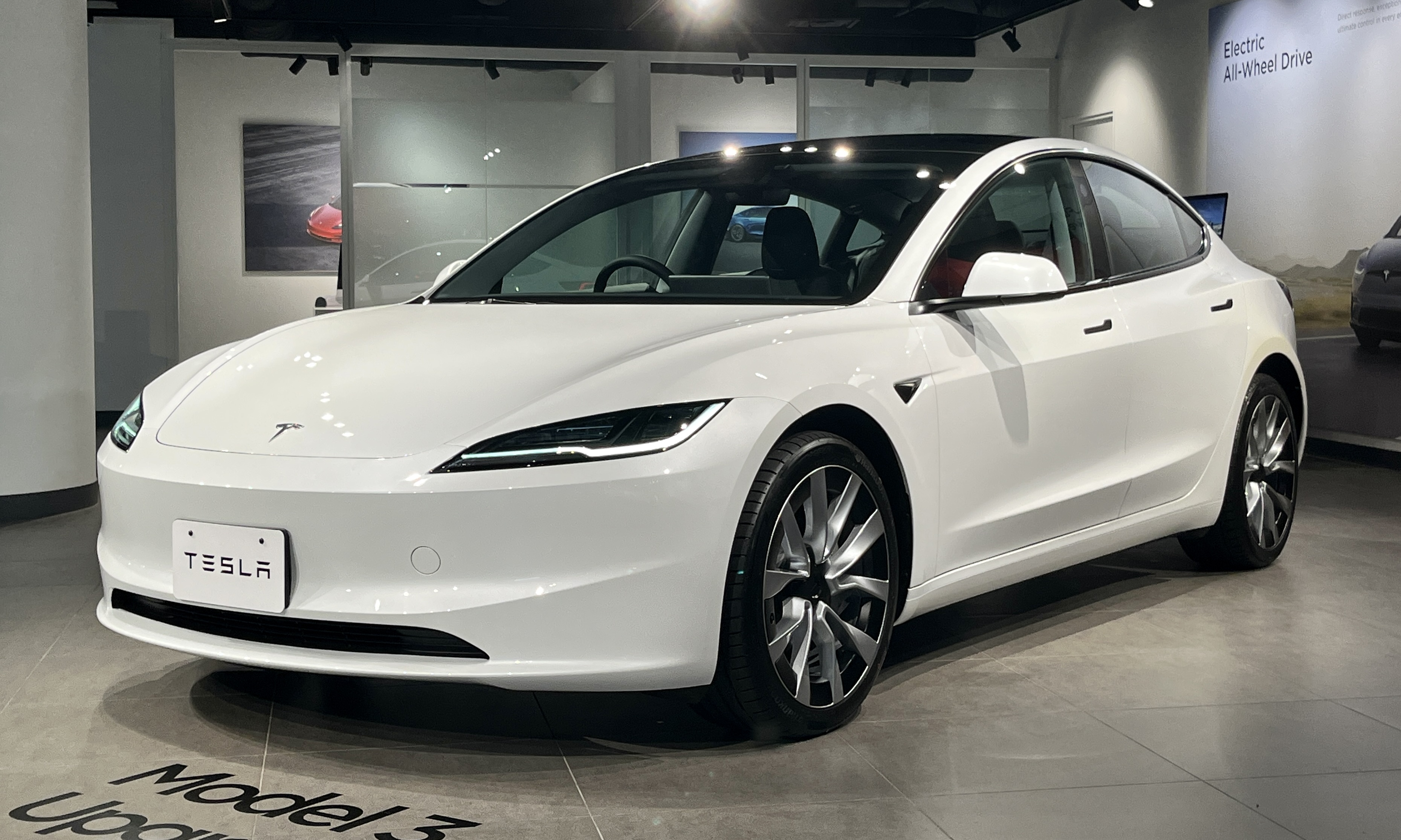
Tesla Recalls Nearly 3 Million China EVs Over Hard-to-Find Emergency Door Releases
An emergency door release has one job when a vehicle loses electrical power: give occupants a mechanical way out. But that backup depends on people being able to identify it quickly, often without instruction and under severe stress. China’s State Administration for Market Regulation has found that the interior mechanical releases in 2,975,910 Tesla vehicles can be difficult to distinguish because their color resembles the surrounding cabin trim.

Tesla is therefore recalling the affected vehicles in China, with the action scheduled to begin September 25. According to details released after the regulator’s announcement, Tesla will add warning labels to the releases and revise its window-control software so the windows automatically lower following a severe collision. The remedies are intended to improve escape and rescue access if a collision disables the low-voltage electrical system and the normal powered-door controls become unavailable.
A mechanical backup must also be obvious
The distinction between having an emergency control and having a usable emergency control is central to this recall. A mechanically operable release can provide independence from the vehicle’s low-voltage supply, but that independence offers limited safety value if an unfamiliar passenger cannot locate the release when the electronic control stops working.
This is fundamentally a human-factors problem layered onto an electrical architecture. Powered latches can support streamlined interfaces and electronically managed access during normal operation. An emergency release addresses the abnormal condition, but occupants may have little time to interpret an inconspicuous handle that blends into the door trim. Warning labels are a relatively simple remedy, yet at a fleet approaching 3 million vehicles, their placement, contrast and consistency become matters of regulatory safety rather than cabin styling.
The window-software change addresses another part of the same escape pathway. Automatically lowering windows after a severe collision can create an additional opening and potentially improve communication or access when doors are difficult to operate. It does not replace the mechanical release, however. Labels, mechanical operation and collision-responsive window logic are separate layers, and the recall’s significance lies in treating them as an integrated emergency-egress system.
Four Tesla models are covered
The door-release action includes 973,156 China-built Model 3 vehicles manufactured from March 4, 2019, through April 29, 2026, and 1,956,713 China-built Model Y vehicles produced from November 16, 2020, through April 30, 2026. It also covers 35,590 imported Model 3s, 8,328 imported Model Xs and 2,123 imported Model Ss.
Tesla will provide the warning labels without charge. The announced action does not mean that every remedy has already been completed, and the software component should not be confused with the physical identification change. Owners will need to follow the recall process applicable to their vehicle when the campaign begins.
The scale also extends beyond Tesla. The company’s vehicles form the largest share of a broader Chinese campaign covering more than 4.27 million vehicles from nine manufacturers. That scope indicates that regulators are treating emergency-release identification as an industry-level design issue associated with increasingly electronic door systems, not merely as an isolated component defect.
A separate recall updates driver monitoring
A second, overlapping Tesla recall covers 2,740,642 China-built Model 3 and Model Y vehicles. That number must not be added to the nearly 3 million vehicles in the door-release action because many of the same cars are covered by both campaigns.
For the second action, the regulator found that the existing monitoring system may not issue a warning when a driver’s gaze leaves the road while steering-assisted functions are active. Tesla plans free over-the-air updates that add or improve in-cabin camera monitoring and driver-attention reminders. Most covered vehicles can receive that update remotely without a service-center visit; vehicles that cannot be updated remotely will require further customer contact.
Remote delivery reduces the access burden for owners and service facilities, but it does not make the regulatory action less consequential. Software now controls safety-relevant behavior ranging from attention alerts to post-collision window movement, while physical labels govern whether occupants can understand a mechanical fallback. The September 25 start will put both sides of that integration software behavior and unmistakable emergency hardware into a fleet-scale test of whether the remedies are deployed consistently.
| More aerospace and engineering stories, right in your MSN feed. Follow AMI on MSN |
By Thomas Caldwell — AMI’s senior editor for mechanical and mobility engineering, covering vehicle electronics, systems integration, electrification, chassis systems, propulsion, and safety policy.

One thought on “Tesla Recalls Nearly 3 Million China EVs Over Hard-to-Find Emergency Door Releases”