USS Abraham Lincoln Heads Home After Reported Shortages Hit 5,000-Person Crew
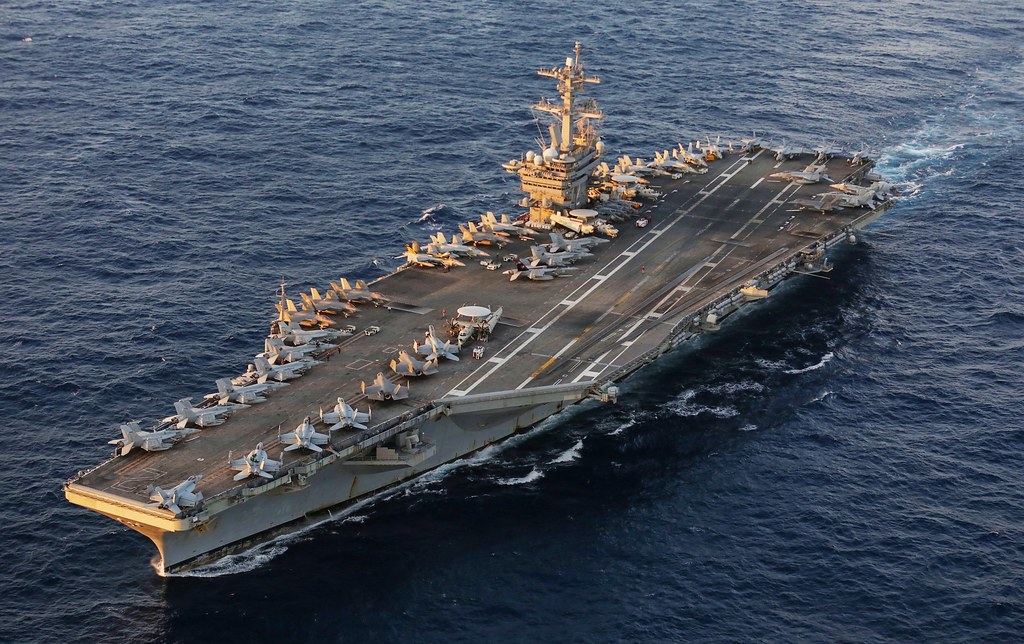
A nuclear reactor can keep an aircraft carrier moving without conventional ship fuel, but it cannot produce soap, toothpaste, food, mail or aircraft fuel. That distinction became consequential aboard USS Abraham Lincoln, which departed the Middle East after a nine-month deployment marked by reports that its roughly 5,000 sailors and other personnel went extended periods without some basic supplies.

Lincoln was headed toward San Diego as of August 21, with the return journey expected to take four to five weeks. USS George Washington was sent to the region as its replacement. The rotation ends Lincoln’s part in the deployment, but it leaves a larger logistics question for the Navy: How resilient is a carrier’s support network when a long-used regional hub becomes unavailable?
Nuclear endurance does not make a carrier self-sufficient
USS Abraham Lincoln is a Nimitz-class nuclear-powered aircraft carrier. Its reactors provide a major endurance advantage because the ship does not need routine deliveries of conventional propulsion fuel. That advantage is real, but narrower than the popular image of a carrier able to remain at sea indefinitely.
The crew still consumes food, hygiene products and other stores every day. Aircraft operations require aviation fuel, while maintenance consumes parts and materials. Mail and personal supplies also matter more as a deployment stretches beyond its original schedule and port access becomes limited. The carrier’s escorts have their own fuel and supply requirements.
Military Sealift Command ships normally bridge the gap by transferring fuel, food, parts and other cargo while ships remain underway. The scale is substantial. During the 2026 Rim of the Pacific exercise, two logistics ships delivered more than 600 pallets of food, dry stores, parts and mail, along with millions of gallons of marine and aviation fuel, through 76 replenishment operations. That exercise involved numerous participating navies, but it illustrates how carrier endurance depends on an industrial-scale cargo system operating behind the flight deck.
A longer supply cycle reduces delivery frequency
The Navy’s base in Bahrain has served as the Fifth Fleet’s logistics headquarters since the late 1990s. Reporting attributed Lincoln’s shortages to disruption of that established network after the base could no longer be used normally for resupply. Claims that Iranian missiles damaged the facility had not been confirmed by the Pentagon, so the condition and extent of any damage remain unresolved.
Retired Navy Capt. Thane Clare estimated that replenishment ships had to travel more than three times as far to collect supplies ashore. In his assessment, a ship that might previously have serviced Lincoln once every three days could do so only once every 10 days under the altered cycle.
Those estimates have not been issued as an official Navy finding, but they describe the fundamental capacity constraint. A replenishment ship spends part of its cycle loading cargo, part traveling to the supported force, part conducting transfers and part returning for another load. Increase the travel portion substantially and the same ship completes fewer delivery cycles. Restoring the previous service rate would require some combination of closer infrastructure, additional logistics vessels, larger cargo loads or more efficient transfer scheduling.
The reported shortages also show why cargo priority matters. When delivery opportunities become less frequent, mission-critical fuel, food and parts compete for finite space and handling capacity with hygiene products, mail and other crew-support items. Those basic goods may not determine whether a reactor operates or an aircraft launches, but their absence becomes increasingly significant during a deployment lasting hundreds of days.
Accounts of conditions remain disputed
MS NOW reported that personnel went long periods without supplies including soap, deodorant and toothpaste. Defense Secretary Pete Hegseth disputed the broader depiction of supply problems, saying the military gives every ship and crew everything it can provide at every moment.
U.S. Central Command commander Adm. Brad Cooper also praised Lincoln’s crew after visiting the carrier and said some accounts were outdated. His comments do not independently resolve the reported duration or severity of individual shortages. Further official confirmation is still needed on both the shipboard conditions and the status of the Bahrain facilities.
The engineering and procurement issue exists even with those uncertainties. Carrier endurance is a system-level property, not simply a feature of the carrier’s propulsion plant. It includes replenishment ships, merchant mariners, ports, warehouses, cargo handling, scheduling and redundancy when a primary hub cannot be used.
USS George Washington can relieve USS Abraham Lincoln, but changing carriers does not by itself shorten the logistics cycle. The next meaningful test is whether the Navy can sustain the replacement force while restoring delivery frequency and maintaining routine crew supplies without relying on a single regional hub.
| More aerospace and engineering stories, right in your MSN feed. Follow AMI on MSN |
By David Whitaker — Associate editor for AMI’s aerospace and drone systems desk, translating flight systems, aircraft programs, spaceflight, and UAV developments into accessible technical stories.