California High-Speed Rail Prepares First Tracks, Full Plan Estimated at $126 Billion
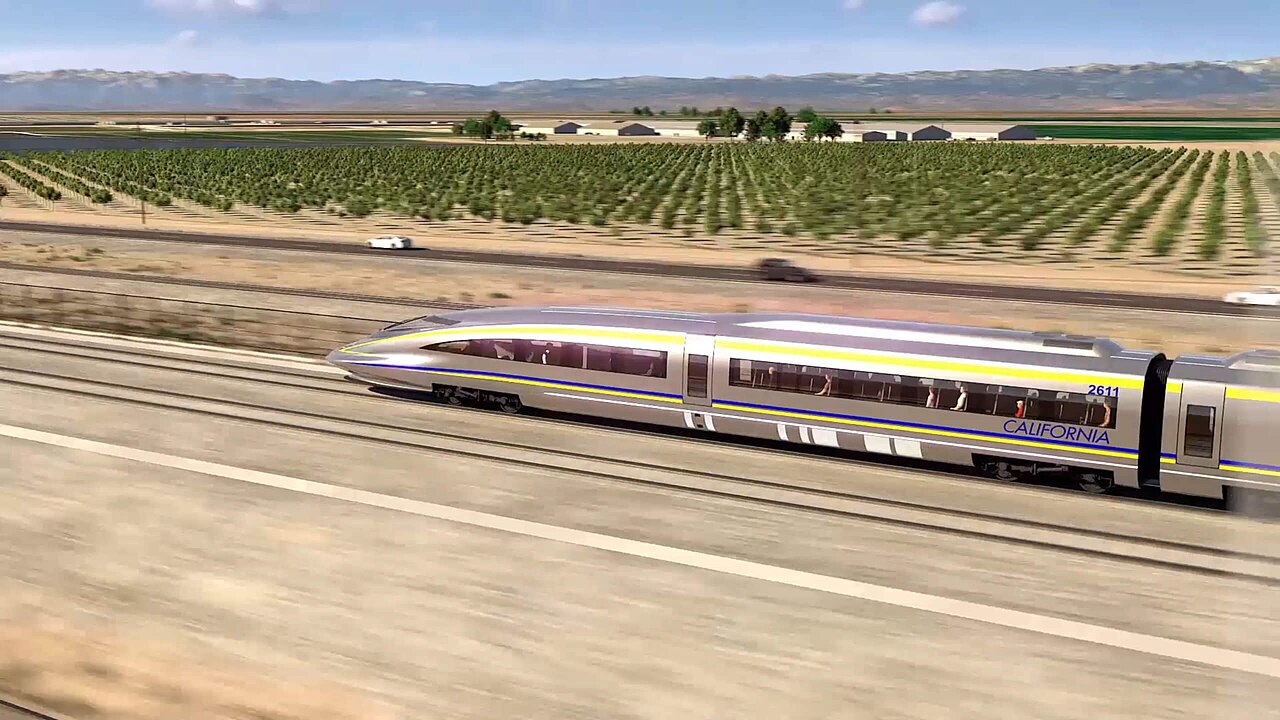
California is preparing to lay its first high-speed-rail tracks in 2026, although the Los Angeles-to-San Francisco system originally promised for 2020 remains years away. The first passenger service is now planned between Bakersfield and Merced, roughly one-third of the statewide route, and may not open until 2033.

That contrast is the program’s central accountability problem. Voters approved a statewide system in 2008 that was presented as a $33 billion project capable of connecting Los Angeles and San Francisco in less than three hours. The current estimate for an optimized San Francisco-to-Los Angeles system is about $126 billion, with a funding shortfall estimated at roughly $90 billion. The $126 billion is a completion estimate, not an amount already spent.
The shift cannot be explained by track construction alone. High-speed rail is a system of civil structures, electrical power, signaling, stations, rolling stock and operating procedures, but every component also depends on access to a continuous and legally usable corridor. California Transportation Secretary Toks Omishakin said approximately 3,000 Central Valley parcels had to be negotiated for the sections now under development.
That right-of-way burden affects engineering sequence. Designs can be disrupted when land access remains unsettled or utilities must be relocated, while delayed work can expose the project to further labor, material and construction-cost escalation. Environmental reviews and lawsuits added other constraints. These processes serve public and legal purposes, but their duration still has to be incorporated into a credible baseline schedule.
California’s experience also illustrates the cost of starting construction without financing for the complete system. Rail authority board member Anthony Williams acknowledged that full-system financing was not in place when construction began. This creates a mismatch between the engineering need for sustained, sequenced delivery and a funding structure assembled in stages.
The authority says existing state funding can cover the initial Central Valley segment. However, a 2026 inspector-general warning said the program could exhaust currently accessible construction funding as soon as December 2027 without a financing mechanism. The review also identified a multibillion-dollar gap through the early 2030s for keeping the Merced-to-Bakersfield schedule on course.
This is partly a cash-flow issue rather than merely a total-revenue question. Long-term annual funding does not automatically provide enough capital when major structures, track systems and contracts require payment earlier. Borrowing against future revenue can move money forward, but it introduces financing costs and requires legislative approval. A pay-as-you-go approach avoids some borrowing expense but can stretch construction over more years, increasing exposure to inflation and delaying public access to service.
The affected groups face different tradeoffs. Taxpayers carry the risk that extended delivery raises total cost. Central Valley communities experience years of construction and land-use disruption before receiving passenger service. Utilities, farms, cities and businesses need crossings or access through authority property, while the railway must protect a corridor intended for safe operations and future maintenance.
A pending California proposal shows how governance details can become engineering constraints. Senate Bill 1425 would establish an encroachment-permit program for new work crossing authority-owned property, a power already available to some other state agencies. The proposal could help manage sewer, water, drainage and electrical-grid crossings, although utilities have raised concerns about costs and control of their infrastructure. It had not completed the legislative process as reported in August 2026.
Federal participation remains another uncertainty. The Trump administration canceled $4 billion in federal grants in 2025, increasing pressure on state funding and prospective private capital. Regardless of the policy dispute surrounding that decision, its program-management consequence is concrete: California must deliver the initial segment with fewer committed federal resources while still confronting the much larger statewide funding gap.
Brightline West provides a useful but limited comparison. Its proposed Los Angeles-area-to-Las Vegas route plans to use the Interstate 15 median, reducing some of the parcel-by-parcel right-of-way complexity that California encountered. It targets maximum speeds of about 200 mph and service in 2029, but neither the date nor financing is assured. The project is seeking a $6 billion federal loan, and Brightline has acknowledged that its Florida service attracted fewer passengers than originally expected.
Private development therefore does not eliminate public financing, demand risk or corridor constraints; it can change how those risks are allocated. California’s more immediate test is narrower: convert years of structures and preparatory work into an operating Bakersfield-to-Merced railway while securing enough near-term capital to preserve the 2033 target. Until that financing and construction sequence are aligned, the first tracks will mark physical progress without resolving the gap between a limited Central Valley service and the statewide system voters were promised.
| More aerospace and engineering stories, right in your MSN feed. Follow AMI on MSN |
By Thomas Caldwell — AMI’s senior editor for mechanical and mobility engineering, covering vehicle electronics, systems integration, electrification, chassis systems, propulsion, and safety policy.