Tesla and Eight Automakers Recall 4.3 Million Cars Over Hard-to-Find Emergency Door Releases
An electronic door latch is convenient until a collision or power failure disables the electrical system that normally opens it. At that point, occupants and rescuers must locate and operate a mechanical backup often under stress, in poor visibility and without prior familiarity with the vehicle. That human-factors problem is driving China’s recall of about 4.3 million vehicles from Tesla and eight other automakers.
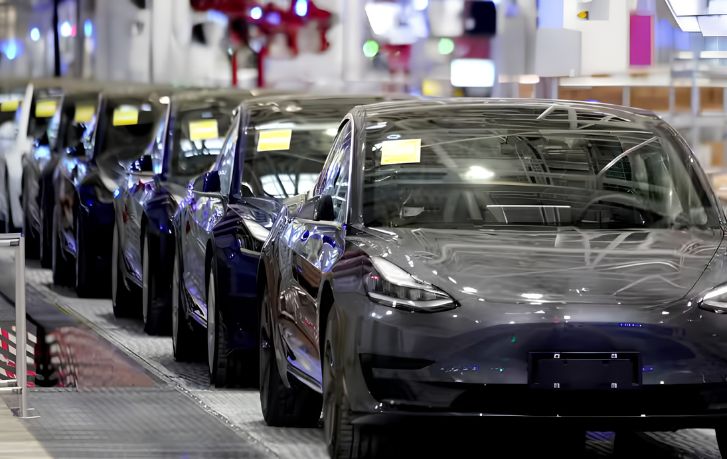
The action, announced August 21 and described as China’s largest automotive recall, addresses emergency mechanical releases that may be difficult to identify or operate after a severe collision and electrical-system failure. Tesla accounts for 2.98 million imported and China-made Model 3, Model Y, Model S and Model X vehicles. Its campaign is scheduled to begin September 25.
Why a mechanical backup must also be obvious
Powered latches separate the user’s normal door command a button, touch-sensitive control, key fob or smartphone from the mechanism that physically unlatches the door. That separation supports flush exterior handles and software-controlled functions, but it creates a second operating path for emergencies.
Providing that backup is only part of the safety problem. It must also be discoverable, recognizable and operable when the primary system is unavailable. A release that blends into interior trim, sits beneath a panel or differs substantially from the control used every day can impose a significant recognition burden precisely when time and attention are limited.
This is fundamentally a systems-integration issue involving hardware, software and human factors. The normal electronic path and the emergency mechanical path cannot be evaluated as independent features. Drivers, passengers unfamiliar with the vehicle and outside rescuers may all need to understand the door architecture without consulting instructions.
That requirement also creates a design tradeoff. Flush handles can provide a minimalist exterior and reduce aerodynamic drag, while electronic controls can support keyless access and other automated functions. Clear mechanical releases may require more visible markings or physical features that conflict with a seamless cabin or body design. China’s action effectively places emergency recognition and access ahead of that aesthetic preference.
Labels and software address different parts of the problem
The remedies vary among manufacturers. They include free warning labels, clearer markings around emergency handles and remote software updates. Labels and markings target discoverability: they are intended to help a person identify the backup release without already knowing where the automaker placed it.
Tesla will add warning labels and deploy software that automatically lowers the windows after a collision. Leapmotor said its remedy combines a warning label with upgraded power-window control software. Xiaomi will recall about 390,000 vehicles, Leapmotor about 371,000 and Xpeng about 264,000.
Remote updates may reduce workshop visits and vehicle downtime, but software should not be confused with the mechanical fallback itself. An automatic window-lowering function can improve access under the conditions in which it operates, while labels can make a release easier to find. Neither changes the underlying principle that a usable physical escape route must remain available when powered door operation cannot function.
The variety of remedies also matters for owners. Some vehicles may be addressed largely through remote programming, while others require physical labels or markings. A recall completed over the air can still represent a formal safety action; the delivery method does not determine the importance of the defect being addressed.
China is moving from recalls to design policy
The campaign reaches beyond one manufacturer because electronic and concealed handles have spread across the electric-vehicle market. China has said concealed door handles will be banned beginning in 2027, making it the first country to phase out the design. That policy shifts the response from correcting existing vehicles toward controlling how future door systems are designed.
A forward-looking rule can provide broader coverage than separate recalls because it establishes a common design boundary rather than relying on manufacturer-specific remedies after vehicles enter service. The tradeoff is that automakers must reconcile emergency mechanical access with aerodynamics, styling, sealing, packaging and electronic convenience across future platforms.
The issue also has direct relevance to the U.S. market, although no matching American recall has been announced. The National Highway Traffic Safety Administration has said it would consider formal standards addressing occupant entrapment during electrical-power failures. It also said automakers had not notified the agency of plans for a comparable U.S. campaign.
That distinction is important: a Chinese recall does not automatically apply to vehicles sold elsewhere, even when related door technology is used globally. For U.S. regulators, the larger policy question is whether emergency-release visibility and operation should be handled through individual defect actions or a common standard applying across manufacturers. China’s 2027 ban answers that question more broadly by making the mechanical escape route not the software-driven door the controlling requirement when electrical power is lost.
| More aerospace and engineering stories, right in your MSN feed. Follow AMI on MSN |
By Thomas Caldwell — AMI’s senior editor for mechanical and mobility engineering, covering vehicle electronics, systems integration, electrification, chassis systems, propulsion, and safety policy.