Pentagon’s Proposed $1.5 Trillion Plan Uses Seven-Year Orders to Expand Factories
A seven-year order can change a factory decision more than a one-year funding surge. Manufacturers are more likely to finance buildings, tooling, workforce training and supplier expansion when they can see demand extending across several budget cycles. That is the mechanism behind the Pentagon’s proposed $1.5 trillion fiscal 2027 defense plan but neither the spending nor the promised industrial payoff is assured.
Under the Arsenal of Freedom initiative outlined by the department, longer fixed-price orders would give defense manufacturers a more predictable production pipeline. The Pentagon says that certainty could encourage companies to invest private capital in U.S. plants, hire workers, enlarge supplier networks and deliver equipment faster. The proposal has not been approved or implemented as a complete budget package, and those projected results remain objectives rather than measured outcomes.
How longer orders are supposed to create capacity
Defense production does not expand simply because a large topline appears in a budget request. A contractor must determine whether expected orders justify additional machine tools, production space, specialized labor and commitments to lower-tier suppliers. If demand could fall after one fiscal year, management has a reason to preserve existing capacity rather than finance an expansion that may sit idle later.
A seven-year commitment changes that calculation by spreading expected demand across a longer operating period. It can support higher equipment utilization and give suppliers a clearer basis for adding shifts or making their own capital investments. Fixed pricing also gives the government greater cost visibility at the time of award, although the ultimate taxpayer result depends on the price negotiated, the stability of requirements and the manufacturer’s ability to control costs over the contract term.
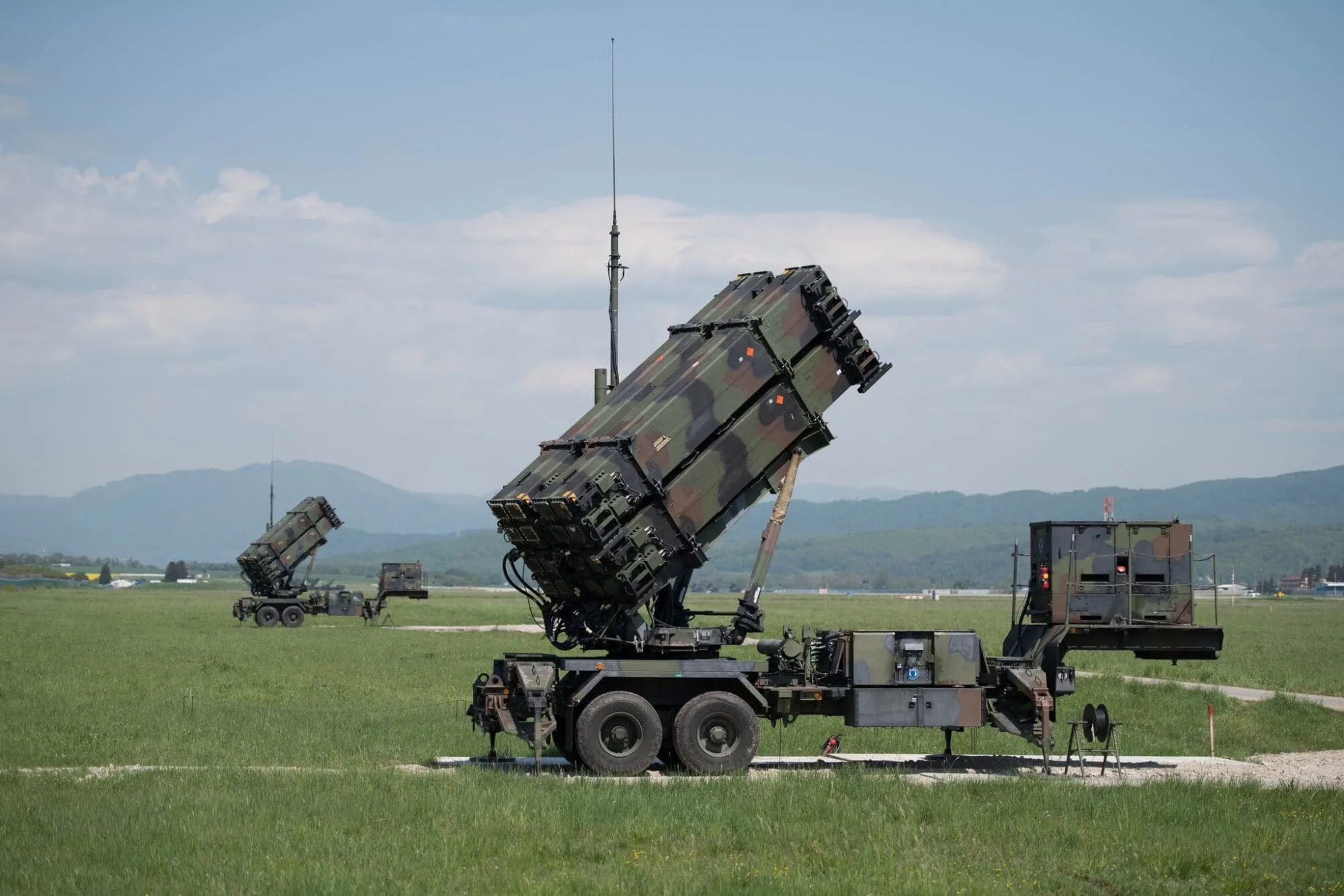
The approach is already visible in a major Army procurement. A July 2026 contract action converted an existing one-year arrangement for Patriot missile production into a seven-year multiyear procurement with a $58.6 billion cumulative face value. No funds were obligated at the time of that modification. Separately, the department announced framework agreements intended to support expanded production of Patriot and high-altitude missile-defense components through steadier demand signals to key suppliers.
Those actions demonstrate that longer ordering structures can be placed on contract. They do not yet establish that seven-year commitments will consistently produce lower unit costs, faster deliveries or privately financed factory growth across the broader defense portfolio. Appropriations, follow-on orders, contractor spending and completed output still have to align.
Large platforms present a harder production problem
The proposed budget would support nuclear command and control, Columbia-class submarines, B-21 Raider bombers and the Sentinel intercontinental ballistic missile program. It also carries implications for Oshkosh Corporation’s Joint Light Tactical Vehicle, Heavy Expanded Mobility Tactical Truck and M-ATV protected-vehicle family, which Pentagon officials cited while discussing stable demand.
These programs do not share one production model. Vehicle factories can draw on some commercial manufacturing practices and a broad industrial workforce. A stealth bomber, ballistic-missile submarine or nuclear command system depends on narrower pools of qualified suppliers, specialized facilities and tightly controlled production processes. More predictable orders may remove one source of uncertainty, but they cannot by themselves eliminate engineering changes, testing requirements, workforce constraints or supplier bottlenecks.
That distinction matters for the plan’s claim of faster output. Long-term demand can justify capacity, but new capacity takes time to design, equip, staff and qualify. Production gains would therefore need to be evaluated program by program rather than inferred from the $1.5 trillion headline.
Competition and taxpayer risk pull in opposite directions
The Pentagon also wants to open more contracts to companies beyond the largest prime contractors. Wider access could strengthen the supplier base and introduce additional production sources. Yet seven-year orders can favor companies already able to meet demanding qualification, security and financing requirements. If entry barriers remain high, longer commitments may lock in incumbent suppliers instead of creating the broader competition the initiative promises.
Taxpayers face a related tradeoff. Stable orders can reduce stop-start production and potentially improve purchasing leverage, but a long fixed-price pipeline commits the government to assumptions about quantities, requirements and industrial performance years in advance. Manufacturers may also price uncertainty into their bids. Any savings claim therefore requires comparison with prior procurement costs, actual deliveries and verified private investment not merely the length of the contract.
Congress still controls appropriations, and the proposed fiscal 2027 package remains subject to that process. The decisive test will be whether approved orders lead companies and lower-tier suppliers to put capital into qualified U.S. production and whether completed B-21, Columbia, Sentinel and Oshkosh systems arrive faster at a demonstrably better public cost.
| More aerospace and engineering stories, right in your MSN feed. Follow AMI on MSN |
By David Whitaker — Associate editor for AMI’s aerospace and drone systems desk, translating flight systems, aircraft programs, spaceflight, and UAV developments into accessible technical stories.