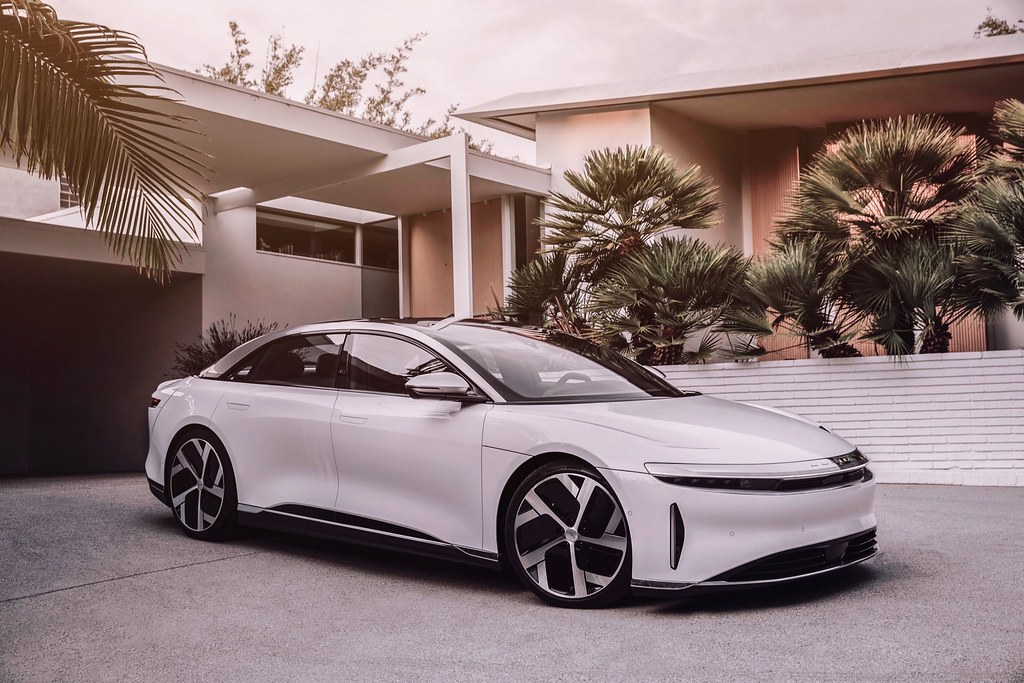
Lucid Recalls 27,185 Air EVs, Tells Owners to Park Outside
An exterior-lighting circuit ordinarily seems far removed from the systems associated with an electric vehicle fire warning. In 27,185 Lucid Air sedans, however, insufficient overcurrent protection may allow that circuit to overheat, creating a fire hazard and potentially disabling exterior lights. Lucid is telling affected owners to park outdoors and away from vehicles and structures until its software remedy is installed.

The recall covers model-year 2022 through 2026 Air vehicles. Owners can use Lucid’s vehicle recall lookup to check whether a specific car is included. The precaution remains in effect until the vehicle is running Software version 2.10.0 or later.
How a lighting circuit creates two safety risks
Overcurrent protection is intended to interrupt or limit electrical flow before wiring and connected components exceed their thermal limits. According to documents posted by the National Highway Traffic Safety Administration, the protection applied to the Air’s low-voltage exterior-lighting circuits may permit excessive current. Continued heating can produce smoke or fire.
The same defect also presents a separate road-safety concern. An overheated circuit can interfere with exterior lighting, including front lighting or the center high-mounted brake lamp. Lighting loss can reduce the vehicle’s visibility to its driver or to surrounding road users, increasing crash risk.
This is therefore not a general claim about electric-vehicle propulsion batteries. The identified issue concerns low-voltage exterior-lighting circuitry and the software-controlled electronic fuse protecting it. That distinction matters because a vehicle’s electrical architecture includes many circuits outside its high-voltage traction system, each requiring protection appropriate to its wiring, loads and possible fault conditions.
Software changes the circuit protection
Lucid’s remedy is a free over-the-air installation of Software version 2.10.0. The revised software lowers the electronic fuse’s protection threshold and prevents a faulted circuit from being repeatedly re-energized during the same key cycle. In practical terms, the update changes how quickly the vehicle isolates an electrical condition that could otherwise generate excessive heat.
Using software to correct an electrical-protection hazard may sound contradictory, but electronic fuses are controlled devices rather than conventional one-time melting elements. Their operating thresholds and response logic can be calibrated in software. That permits Lucid to revise protection without replacing physical parts, provided the affected vehicle successfully receives and installs the new logic.
The over-the-air delivery also changes the logistics of the recall. Owners generally do not need to bring their cars to a service location solely to receive the remedy, and a large portion of the affected fleet had already been updated when the recall was filed. Lucid reported that 20,719 customers had installed version 2.10.0 or later.
Remote distribution does not eliminate the need to verify completion. A downloaded package, a pending installation and an installed software version are not equivalent states. Owners should confirm that their Air displays version 2.10.0 or later before treating the parking restriction as lifted. Those who need assistance with installation are expected to be directed to Lucid.
Reports prompted investigation, but causation remains qualified
Lucid reported three fires it believed were related to the overheating issue and four reports involving smoke. It also identified 33 warranty reports involving damaged center high-mounted stop-lamp wiring harnesses that could be connected to the defect. The potential relationship does not establish that every warranty report, smoke event or fire had the same cause.
Owners who have not installed the update are expected to receive notification letters beginning Oct. 16. Until installation is complete, the instruction is specific: keep an affected Air outdoors and separated from buildings, other structures and other vehicles.
The unusual aspect of this campaign is not merely that software can remedy a hardware-level electrical hazard. It is that the remedy’s effectiveness depends on each vehicle reaching a confirmed software state. For the remaining cars below version 2.10.0, the safety boundary is still physical distance from structures and nearby vehicles.
| More aerospace and engineering stories, right in your MSN feed. Follow AMI on MSN |
By Thomas Caldwell — AMI’s senior editor for mechanical and mobility engineering, covering vehicle electronics, systems integration, electrification, chassis systems, propulsion, and safety policy.