Ukraine’s 21 August Refinery Strikes Coincided With Moscow Gasoline Lines
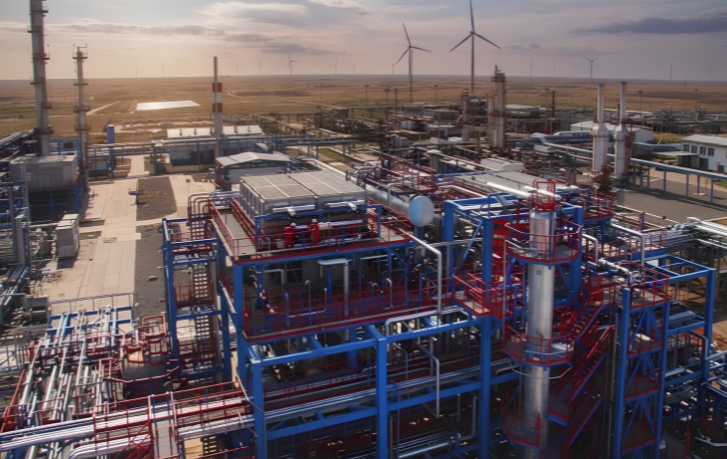
Twenty-one is the number defining the pressure on Russia’s oil-refining system in August 2026. Ukrainian forces reportedly struck Russian refineries at least 21 times during the month the highest monthly count recorded so far as gasoline shortages and lines of 30 to 50 vehicles reached Moscow, ordinarily the country’s largest and best-supplied fuel market.
Over the same month, Russian crude processing averaged just over 3.8 million barrels per day, Bloomberg reported on August 28, citing an estimate from EA Analytics, a division of Energy Aspects. Russian refineries typically process between 5.3 million and 5.5 million barrels per day during the higher-demand summer period. That puts August throughput roughly 1.5 million to 1.7 million barrels per day below the usual seasonal range.
The figures establish a strong overlap between repeated drone pressure and reduced refinery utilization, but they do not prove that every missing barrel resulted from a strike. Detailed damage, repair schedules and the contribution of individual incidents have not been established publicly. The sound engineering reading is therefore an aggregate one: repeated disruptions coincided with a refining network operating far below its normal summer level.
Gasoline exposed the domestic supply constraint
Gasoline production and deliveries to the Russian market fell nearly 20% year over year during the first three weeks of August, according to a person familiar with the data cited by Bloomberg. Residents in Moscow and the surrounding region reportedly used community chats to exchange information about fuel availability and waiting times.
For a refinery system, reduced crude runs do not translate evenly into every finished product. Operators must balance available processing units, crude input, storage, product specifications and distribution requirements. The national output figures do not identify which equipment was unavailable, so they cannot support a unit-by-unit failure assessment. They do show that the system had less operating capacity with which to meet simultaneous demand for gasoline, diesel and other products.
The timing adds weight to the capacity interpretation without settling causation. Fuel availability reportedly improved during a slowdown in attacks in the second half of July, then deteriorated as strike frequency increased in August. Pressure continued with a reported August 28 drone strike on the Slavneft-YANOS refinery in Yaroslavl, where fires followed. The extent of damage and any repair timeline remain unconfirmed.
Diesel restrictions created a domestic buffer
Diesel presents the more revealing comparison. Production fell by more than 23% during the first three weeks of August, yet domestic diesel deliveries declined by only about 3%. The much smaller reduction in deliveries was attributed largely to restrictions on most diesel exports, which retained more product inside Russia.
That is a supply-allocation response rather than a restoration of refining capacity. Restricting exports can protect domestic users temporarily, but it shifts the shortfall outward and reduces flexibility in a system that previously supplied roughly 10% of global diesel exports. It also explains why the deeper production decline did not produce an equally large drop in Russian domestic diesel deliveries.
The export channel was already narrowing before August’s reported strike record. S&P Global reported that Russian seaborne refined-product exports fell to 1.18 million barrels per day in July, their lowest level in a dataset beginning in 2016. The Centre for Research on Energy and Clean Air separately calculated that July product loadings fell 23% from June to 4.7 million tonnes, less than half the July 2025 volume.
For drone operations, the significant measure is not any single reported impact but the sustained burden placed on a geographically distributed industrial network and the systems defending it. Twenty-one reported strikes in one month imply recurring demands on detection, interception, emergency response and industrial recovery. Publicly available information does not establish interception rates or identify a specific air-defense weakness, but the continuing incidents show that readiness must be maintained across repeated events rather than one isolated emergency.
Russia’s immediate response has preserved domestic diesel deliveries more effectively than gasoline availability. It has not erased the underlying capacity gap: August crude processing remained just over 3.8 million barrels per day while motorists in Moscow reportedly encountered shortages. The next decisive measure will be whether refinery runs recover and whether that recovery can occur without keeping export restrictions in place.
| More aerospace and engineering stories, right in your MSN feed. Follow AMI on MSN |
By Stephen Wallace — Editor for AMI’s aerospace integration and unmanned mobility coverage, focused on drone manufacturing, VTOL systems, autonomous networks, and air-ground mobility links.