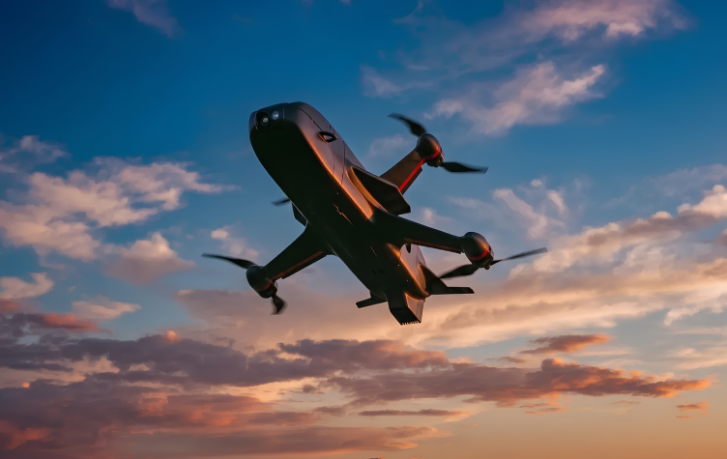
Ukraine’s Sting S Reports Geran-5 Shootdown, but Scale Remains Unproven
Roughly a dozen Geran-4 interceptions and at least one Geran-5 shootdown give Ukraine’s Sting S its first reported results from combat testing. Wild Hornets said a Ukrainian tactical air-defense unit used the new interceptor against the Geran-5, while a company spokesperson said several of the faster drones had been downed over a period of days alongside approximately 12 Geran-4s. These attributed results provide initial operational evidence that a purpose-built Ukrainian interceptor can begin closing the speed gap created by Russia’s newest jet-powered attack drones.
The harder test now moves from interception to industrial scale. Wild Hornets has not disclosed the Sting S’s speed, production cost or planned output, and says mass production will begin only after the trial period ends. A handful of successful engagements therefore does not yet establish that the system can deliver reliable, economical defense against large attack waves.
A separate Ukrainian interceptor has also reportedly crossed the same basic threshold. Ukraine’s SBU security service said a jet-powered, delta-wing interceptor fielded by the agency downed a Geran-5. Its different airframe indicates that Ukraine is not relying on a single design path, but the available information does not establish that interceptor’s cost, manufacturing rate or wider deployment status.
Why one shootdown is not the decisive number
For an interceptor program, a successful combat test validates only part of the system. It indicates that the aircraft, control chain, operator and engagement process can work together under operational conditions. It does not reveal the probability of success across repeated launches, weather and operating environments, nor does it show how many trained crews and launch systems are available.
That distinction matters because Russia is scaling the target set. Ukraine’s air force reported that Russian use of jet-powered Shahed-derived drones increased fivefold from June to July, although it did not publish the underlying monthly totals. Air force spokesperson Yuriy Ignat attributed the rise to increased Russian production and expected August figures to show further growth.
Later figures point in the same direction but vary by source. Ukraine’s air force said Russia launched 2,800 jet-powered drones in August, compared with 350 in June. Drone expert Serhii Beskrestnov separately estimated more than 2,500 during August and 1,500 in July. These wartime counts are attributed and are not fully reconciled, but all describe an increase large enough to turn interceptor throughput into a central design requirement.
A Ukraine Air War Monitor assessment cited a Ukrainian military-intelligence estimate of roughly 3,000 Geran-4 and Geran-5 drones produced monthly. That estimate remains difficult to verify independently, but it illustrates the production challenge: an interceptor that works technically can still fall short if factories cannot deliver it at a comparable and sustainable tempo.
Speed buys access, but economics determine coverage
The Sting S addresses a performance boundary that increasingly constrains lower-cost defenses. Earlier propeller-driven Geran-2 drones reportedly travel at about 115 mph. Newer Geran-3 and Geran-4 variants use turbojets and generally fly at 200 mph or faster, while the Geran-5 has been reported at nearly 375 mph. Jet-powered variants can also operate at substantially higher altitudes, reducing the useful engagement envelope of many inexpensive quadcopter interceptors and short-range ground systems.
Higher interceptor speed is not free. It can require more demanding propulsion, tighter structural margins, faster sensing and control response, and a launch-and-command architecture able to put the vehicle in the right place within a shorter warning window. None of those factors proves that Sting S is expensive; rather, they explain why its undisclosed unit cost and production method are essential to judging the program.
The cost comparison is especially important because older Ukrainian interceptor drones typically cost several thousand dollars, far below the value of their targets. If a faster interceptor preserves a substantial cost advantage, it could reduce dependence on scarcer fighters and surface-to-air missiles. If its price or manufacturing complexity rises too far, it may become another limited resource that must be reserved for selected threats.
Reported interception rates show why Ukraine is pursuing that middle tier. The air-war monitor placed the interception rate for propeller-driven Gerans at 90% to 95%, compared with about 60% for jet-powered models. Those figures are Ukrainian reporting rather than independently audited performance data, but they define the operational gap the new interceptors are intended to fill.
Sting S has now reportedly demonstrated that it can reach targets at the difficult end of that gap. The next meaningful milestone is no longer another isolated shootdown. It is the end of trials followed by disclosed evidence that production, cost and repeatable performance can keep pace with a Geran fleet measured in thousands per month.
| More aerospace and engineering stories, right in your MSN feed. Follow AMI on MSN |
By Stephen Wallace — Editor for AMI’s aerospace integration and unmanned mobility coverage, focused on drone manufacturing, VTOL systems, autonomous networks, and air-ground mobility links.