Honda Develops Track-Focused Civic Type R for US, Production Still Unconfirmed
Honda is developing a more track-focused Civic Type R for American roads, but enthusiasts still cannot order one or know whether they ever will. The company has confirmed that the Civic Type R HRC Concept is “in development for the U.S. market”, while stopping short of announcing a production model, final specifications, price or build date.
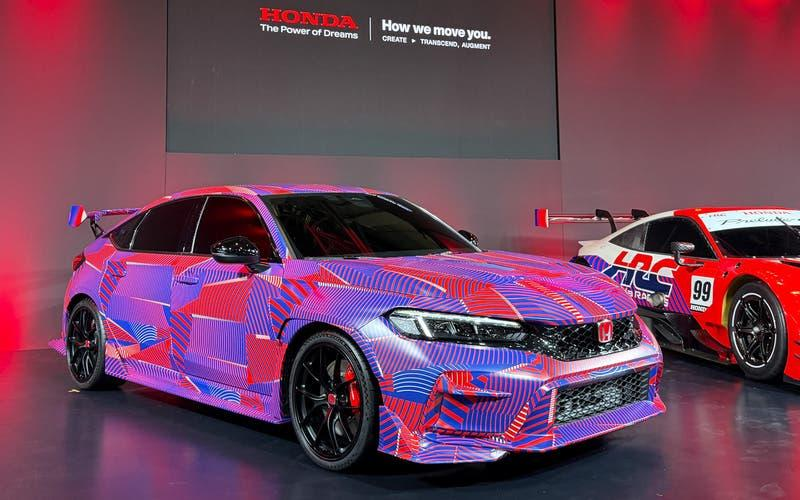
The concept is making its North American debut at the 2026 SEMA Show in Las Vegas, which runs November 3 through 6. It previously appeared at the Tokyo Auto Salon. Its arrival in the United States provides the clearest official indication yet that Honda is evaluating a more aggressive version of its hottest Civic specifically for American customers, although development for a market is not the same as production approval.
Racing input could mean more than an appearance package
Honda says the project incorporates technology from Honda Racing Corporation, or HRC, along with input from Honda racing drivers. That combination suggests the development work extends beyond badges and cosmetic trim, but Honda has not identified which mechanical or chassis systems have changed.
The visible aerodynamic revisions are the most concrete differences so far. The displayed concept has a revised front bumper and a reworked rear wing intended to generate more downforce than the standard Civic Type R. It also appears with small winglets above its flared front fenders, an unusually aggressive feature for a Civic intended to remain usable on public roads.
Those parts could affect more than styling. Additional downforce can improve tire loading and high-speed stability, particularly during cornering, but aerodynamic load normally comes with a drag penalty. The placement of the front and rear devices also matters because changing the balance between the axles can alter how a car responds as speed rises. Honda has not released aerodynamic figures, test results or details about how the concept’s revised front and rear components work together.
That missing data limits what can be concluded from the hardware on display. The larger rear wing may be functional, but there is no confirmed figure for its added downforce or drag. Honda also has not said whether the fender-mounted winglets will survive the transition from concept development to any road-going model. Production parts would have to satisfy a broader set of requirements than track hardware, including durability and acceptable behavior across everyday speeds and road conditions.
Power and cooling changes remain open questions
Other potential upgrades including revised cooling, a larger intercooler, a new exhaust and increased engine output have been discussed as possibilities, not confirmed specifications. Honda has provided no power figure, torque figure or performance result for the HRC Concept. There is also no final specification sheet showing changes to its suspension, brakes, tires or mass.
Cooling would be an important consideration if Honda pursues higher sustained track performance. More engine output increases the thermal load that the cooling system must reject, while repeated high-load running can expose limits that may not appear during ordinary street use. A larger intercooler or revised airflow path could help manage intake temperatures, but Honda has not confirmed either item for a US-market production car.
The unanswered question is therefore not only whether the HRC Concept will be built, but how much of its development hardware could reach customers. A production version could retain the prominent aerodynamic package, adopt less conspicuous components beneath the body, or never progress beyond the concept stage. Honda has not committed to any of those outcomes.
A separate parts program has a firm timetable
Honda Racing Corporation USA is also launching an HRC Performance Parts program for Honda and Acura vehicles. The initial range includes lightweight forged wheels, exhaust systems and a short-throw shifter, while prototypes at SEMA include adjustable coilovers with camber plates and a large brake kit with six-piston calipers.
Unlike the Civic Type R HRC Concept, this parts program has a stated sales plan. Honda says the components will be offered through Honda and Acura dealerships and Honda DreamShop beginning in March 2027, following final performance and durability testing that includes evaluation at Germany’s Nürburgring.
The parts launch provides a defined route for some HRC-developed equipment to reach consumers, but Honda has not connected that catalog to a production HRC-badged Civic Type R. For now, the concept establishes the direction: more aerodynamic load, racing-driver input and HRC engineering aimed at American roads. Whether those features become a complete road car and what that car would deliver or cost remains unannounced.
| More aerospace and engineering stories, right in your MSN feed. Follow AMI on MSN |
By Robert McKinney — Editor-in-Chief for AMI’s automotive and mobility coverage, with a mechanical engineering background and a decade reporting on powertrain systems, EV innovation, and global vehicle manufacturing.