Seven 2025 Toyota Tundra Owners Report Engine Failures Outside Recall
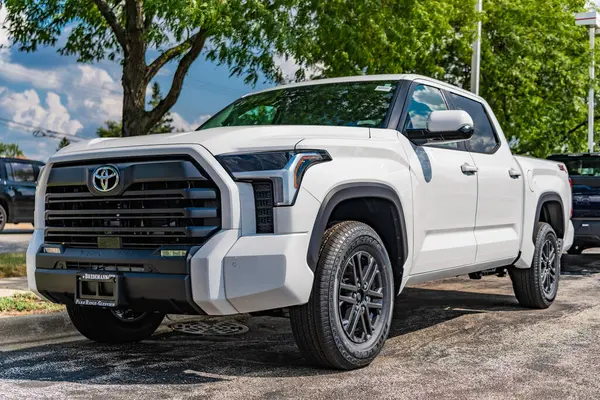
Seven owners have submitted complaints to federal safety regulators describing engine failures or seizures in 2025 Toyota Tundras, even though Toyota’s existing engine recalls stop at the 2024 model year. A review of all 141 complaints listed for the 2025 Tundra in the National Highway Traffic Safety Administration database as of Nov. 2 found that five of the seven engine-related reports were filed in 2026.

The reports raise a reliability question about trucks built beyond the recall boundary, but they do not identify a common defect. NHTSA does not verify each consumer complaint, and seven reports cannot establish a failure rate or show that the engines failed for the same reason. The agency says it continuously reviews complaint information alongside manufacturer data and other material to identify potential safety issues warranting follow-up. There is no set number of complaints required to open an investigation.
What the owners reported
Most of the seven complaints described failures at highway speed, making loss of power the immediate safety concern regardless of the eventual mechanical diagnosis.
One owner of a 2025 Tundra 1794 reported losing power at approximately 53,000 miles on a Houston freeway while the owner’s daughter was in the truck. According to the complaint, a dealer determined that the engine block and most internal components exposed to engine oil needed replacement. The owner also wrote, “The dealership told me the failure is not currently related to the existing Toyota Tundra engine recall.”
Another owner reported a “total engine seizure” on an interstate on July 20. The complaint said the powertrain warranty covered the repair, but the work was scheduled for late August more than 35 days after the failure. That account illustrates a consequence beyond the breakdown itself: even a covered repair can leave an owner facing towing, disrupted transportation and an extended wait for major engine work.
A third complaint attributed an April 29 highway-speed seizure to machining debris and called it “the same issue,” but did not cite a dealer diagnosis supporting that conclusion. Another described a bearing failure at highway speed followed by a no-restart condition. Those are owner accounts submitted to NHTSA, not findings by Toyota, a dealer or the agency.
Why the recall mechanism is relevant but not confirmed
Toyota has filed three recalls involving machining debris left in certain V35A twin-turbo V6 engines. Debris circulating with the engine oil can damage the main bearings, which support the crankshaft. Progressive bearing damage can produce abnormal operation and ultimately lead to an engine stall or loss of motive power.
The recalls cover affected 2022 through 2024 Tundras, while NHTSA’s recall listing for the 2025 Tundra contains no engine recall. Toyota previously explained that engines made after the recalled population received a production change: “Engines produced after those included in this recall were manufactured with an improved #1 main bearing to help resist certain debris that might remain.”
That improved bearing creates the central engineering tension. It was intended to make later engines more resistant to residual debris, yet the seven complaints describe serious failures in 2025 trucks. The available accounts do not provide the teardown findings, part examinations, oil analysis or production records needed to connect those failures to machining debris. Bearing failure also describes a damaged component; by itself, it does not establish why the component failed.
No public Toyota statement addressing the reported 2025 Tundra engine failures was identified. Without a manufacturer assessment or a formal NHTSA investigation, the key missing information is whether the complaints represent unrelated failures, a shared mechanism distinct from the recall, or a continuation of the known debris problem beyond the listed population.
What owners can document
Toyota’s recall notices identify engine knocking, rough running, failure to start and loss of power as possible symptoms associated with the recalled condition. A 2025 owner experiencing those symptoms can ask the dealer for the diagnostic findings in writing and retain repair orders, towing records and manufacturer correspondence. NHTSA accepts safety complaints online and through its Vehicle Safety Hotline at 888-327-4236; including the vehicle identification number and supporting records can make a complaint more useful for trend analysis.
The seven reports remain signals rather than a defect determination. The next meaningful evidence would be consistent dealer diagnoses, manufacturer field data or an NHTSA action linking failures across multiple 2025 trucks. Until then, the recall boundary is clear, while the cause of the reported failures beyond it is not.
| More aerospace and engineering stories, right in your MSN feed. Follow AMI on MSN |
By Thomas Caldwell — AMI’s senior editor for mechanical and mobility engineering, covering vehicle electronics, systems integration, electrification, chassis systems, propulsion, and safety policy.