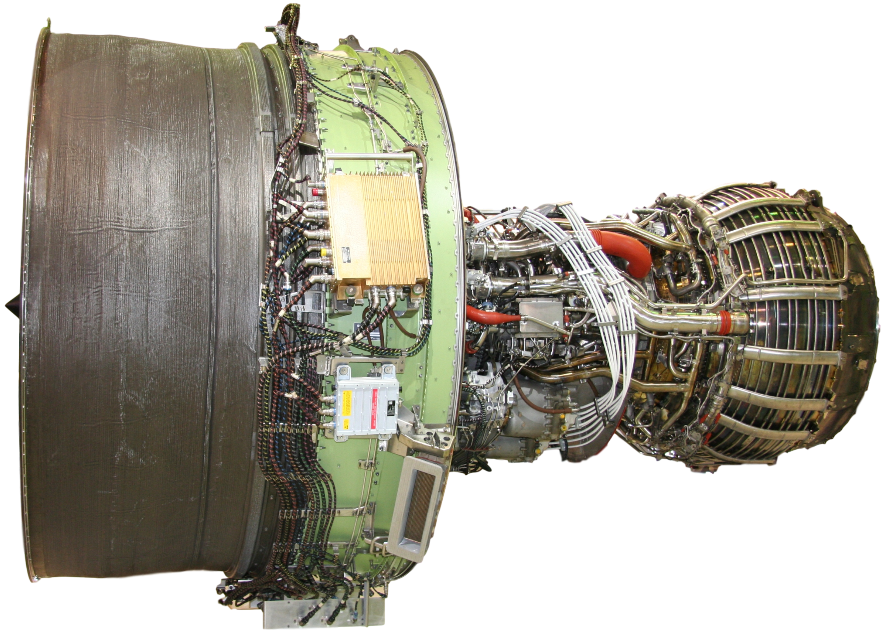
Study Links Turbine-Blade Damage to Five Boeing 787 Engine Removals
A Chinese maintenance study reported that five GE GEnx-1B engines were removed from an unnamed airline’s Boeing 787 fleet after inspectors found damage in first-stage high-pressure turbine blades. All five cases reportedly involved material loss between cooling holes on the convex surface of blades used in the engine’s Phase 2 or Phase 2+ configuration.

The study, written by Xia Xiaofeng of Xiamen Airlines and published in the September issue of Aviation Maintenance & Engineering, described radial cracks appearing between the first and second, or second and third, rows of cooling holes. A GE analysis cited in the study attributed the damage to thermal fatigue. The findings identify a maintenance burden affecting some engines, not damage across every engine using these blade versions.
Why cracks form around cooling holes
A turbine blade operates in one of an aircraft engine’s most thermally demanding sections. Cooling air routed through internal passages and discharged through small surface holes protects the blade from the hot gas stream. The same openings, however, create localized temperature gradients and stress concentrations as the engine repeatedly heats and cools.
That tradeoff is consistent with a separate 2025 study of film-cooled turbine blades. Although it did not examine the GEnx blade involved in the removals, its simulations and thermal-shock testing found maximum stress around cooling holes and initial fatigue-damage traces after 1,000 cycles for the tested blade configuration. It also found that both excessive and insufficient cooling-air pressure or temperature could shorten fatigue life.
The GEnx maintenance study similarly reported that cracks in individual parts may emerge after roughly 1,000 flight cycles, with one cycle representing a takeoff and landing. According to its described progression, radial cracks can spread and connect, potentially allowing material to separate from the blade. That possibility explains why inspectors track both the location and size of damage rather than treating every observed defect as having the same operational significance.
Inspection limits govern continued operation
One case shows how continued operation can remain permissible while an engine removal is already being planned. A borescope inspection found material loss after the engine had accumulated 1,818 cycles. The applicable maintenance limit required removal for repair within the next 10 cycles. Following another inspection, GE approved 30 additional cycles, but the airline removed the engine after four more cycles when a replacement became available.
This sequence illustrates the role of inspection-based limits. A finding can be monitored for a defined interval if it remains within the approved criteria, while repeated inspections establish whether the defect is stable or progressing. Continued operation under such a limit is therefore a controlled maintenance decision, not an indication that the blade can remain in service indefinitely.
It also exposes the logistical constraint behind an engine change. The airline’s decision to remove the unit when a replacement became available suggests that spare-engine timing can influence how long an operator uses an approved inspection interval. An early removal takes the engine and potentially the aircraft out of its planned rotation; waiting requires inspection capacity, engineering coordination and confidence that the defect remains within its limit.
417 engines define the potential inspection population
GE data cited in the study indicated that about 417 engines equipped with Phase 2 or Phase 2+ blades were operating worldwide as of August 2025. That represented approximately 15% of the global GEnx fleet. The figure defines the reported configuration population, not the number of engines with cracked blades: the study identified five removals at one unnamed Chinese airline.
Xia recommended more frequent inspections after 2,000 cycles, along with closer monitoring of vibration, exhaust-gas temperature and other engine parameters. Those recommendations are not described as a regulatory mandate. They instead outline a proposed surveillance approach for detecting deterioration before cracking exceeds maintenance limits.
For airlines, the immediate consequence is primarily one of maintenance planning and aircraft availability. Borescope access, repeat inspections, shop capacity and replacement-engine supply all have to align before a time-limited defect reaches its removal threshold. In the documented 1,818-cycle case, the engine remained within an approved operating window, yet replacement availability ultimately determined when it left service.
| More aerospace and engineering stories, right in your MSN feed. Follow AMI on MSN |
By Thomas Caldwell — AMI’s senior editor for mechanical and mobility engineering, covering vehicle electronics, systems integration, electrification, chassis systems, propulsion, and safety policy.