FAA Still Had One-Third of 33 Potomac Safety Changes Unfinished
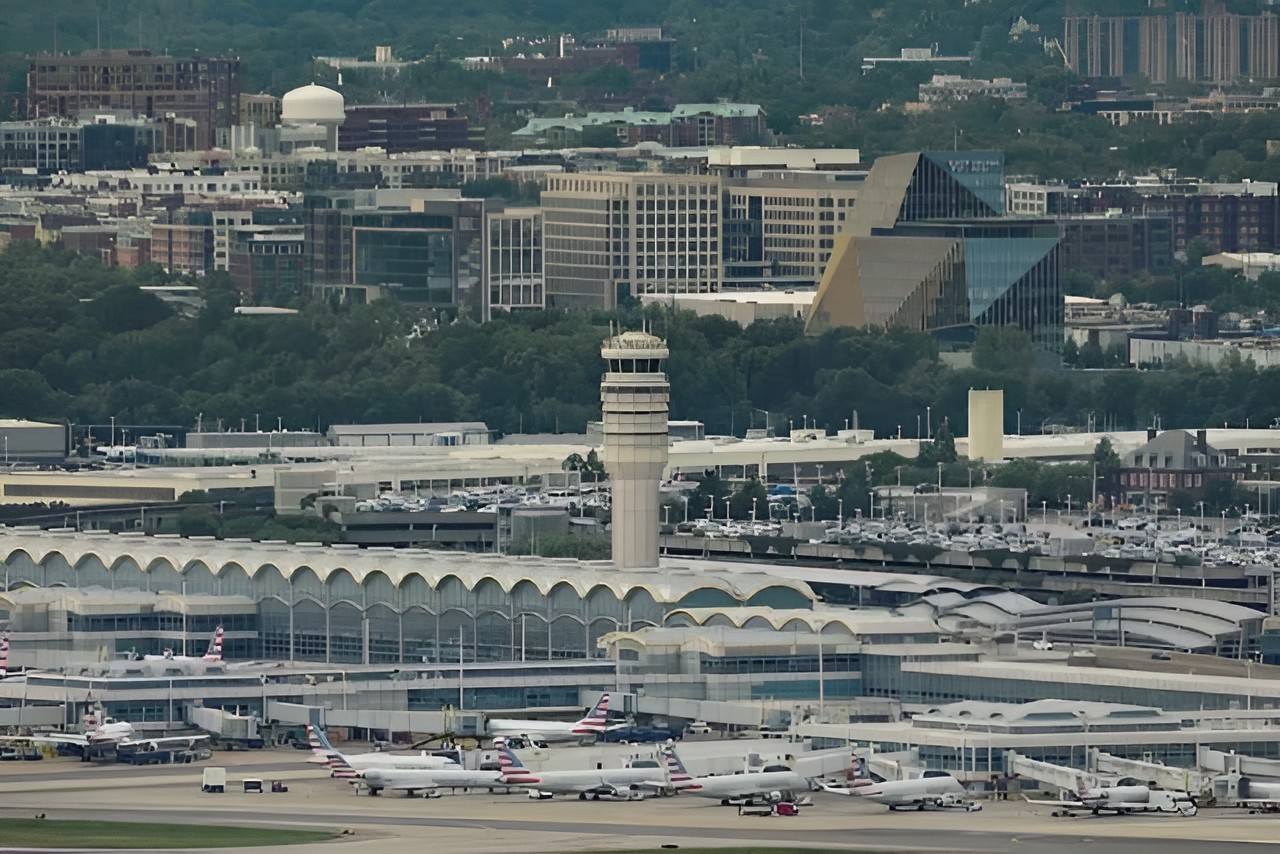
More than 18 months after an Army helicopter and an American Eagle commuter jet collided near Ronald Reagan Washington National Airport, the Federal Aviation Administration still had not implemented roughly one-third of 33 recommended equipment and procedural changes. The National Transportation Safety Board categorized the unfinished response as unacceptable, while the FAA said it was continuing to evaluate how to address the remaining recommendations.
The Jan. 29, 2025, collision killed all 67 people aboard the two aircraft and ended a nearly 16-year period in which major U.S. airlines carried about 10 billion passenger journeys without a crash fatality. In its investigation of the Potomac collision, the NTSB identified systemic problems involving airspace design, oversight and risk management around Reagan National.
The implementation gap does not mean the airspace was left unchanged. The FAA restricted mixed helicopter and fixed-wing traffic around the airport, closed part of a helicopter route, revised local routes and zones, increased staffing support and eliminated visual separation within five nautical miles of Reagan National. In January 2026, the Transportation Department formalized restrictions on most helicopter and powered-lift operations in specified areas when certain runways are in use.
Why unfinished recommendations still matter
Aviation safety depends on overlapping defenses rather than one perfect barrier. Under the widely used “Swiss cheese” model, airspace design, controller procedures, staffing, pilot compliance, surveillance, cockpit alerts and collision-avoidance equipment each cover weaknesses in the others. A failure becomes catastrophic when gaps in several layers align.
The Potomac airspace placed helicopter traffic close to an airline approach path inside a narrow corridor constrained by restricted airspace. The NTSB determined that the FAA’s placement and oversight of the helicopter route, along with an overreliance on visual separation, were among the accident’s causes. It also identified the helicopter crew’s ineffective visual separation, controller workload and loss of situational awareness, and altitude-related issues as causal or contributing factors.
That combination explains why the recommendations extend well beyond redrawing one route. They address controller training, supervisory workload, real-time risk assessment, traffic-flow management, route reviews, conflict alerts, radio-transmission blocking, cockpit traffic displays and airborne collision-avoidance systems. Some changes can be made through local operating orders; others require new standards, rulemaking, equipment development, aircraft retrofits or coordination among civil and military operators.
Those differences help explain why implementation does not move at one speed. A procedural restriction can take effect relatively quickly, although it may reduce routing flexibility or introduce delays. Equipment mandates require technical standards, certification work, installation planning and decisions about which aircraft must be retrofitted. Better alerting also has to be designed around human factors: an alert must arrive early enough to help, clearly identify the conflict and avoid becoming another distraction in a high-workload cockpit or control tower.
The cost of additional separation is primarily operational. Helicopters accustomed to direct passage through busy terminal airspace may need longer routes or may wait while controllers establish required spacing. When medical or law-enforcement flights receive priority, airline traffic may be delayed instead. That is the practical trade: less reliance on pilots visually finding another aircraft can mean lower traffic-flow efficiency.
The FAA expanded one safeguard nationwide
In March 2026, the FAA moved beyond the Washington airspace and suspended visual separation between helicopters and airplanes where helicopter routes cross arrival or departure paths in major controlled-airspace areas. Controllers must instead use radar to maintain specified lateral or vertical spacing. The agency said a year-long review found visual separation insufficient as a risk-control measure in high-traffic areas.
This nationwide change addresses one prominent weakness, but it does not substitute for the remaining layers. Radar spacing does not by itself resolve staffing pressure, controller training, route geometry, radio interference, cockpit traffic awareness or the quality of conflict alerts. A resilient system needs those protections to remain effective when another one is unavailable, misunderstood or overloaded.
U.S. airline travel remains exceptionally safe, as NTSB Chair Jennifer Homendy has emphasized. Its safety record was built partly through institutional changes after accidents, including the 1956 Grand Canyon collision and the 2009 commuter-plane crash near Buffalo. The unresolved issue around Reagan National is therefore not whether the entire system has become broadly unsafe, but how quickly identified weaknesses are converted into durable barriers. As Homendy put it, “Recommendations alone don’t save lives. Action does.”
| More aerospace and engineering stories, right in your MSN feed. Follow AMI on MSN |
By Thomas Caldwell — AMI’s senior editor for mechanical and mobility engineering, covering vehicle electronics, systems integration, electrification, chassis systems, propulsion, and safety policy.