Royal Navy Submarine Returns From Record 217-Day Patrol as Fleet Ages
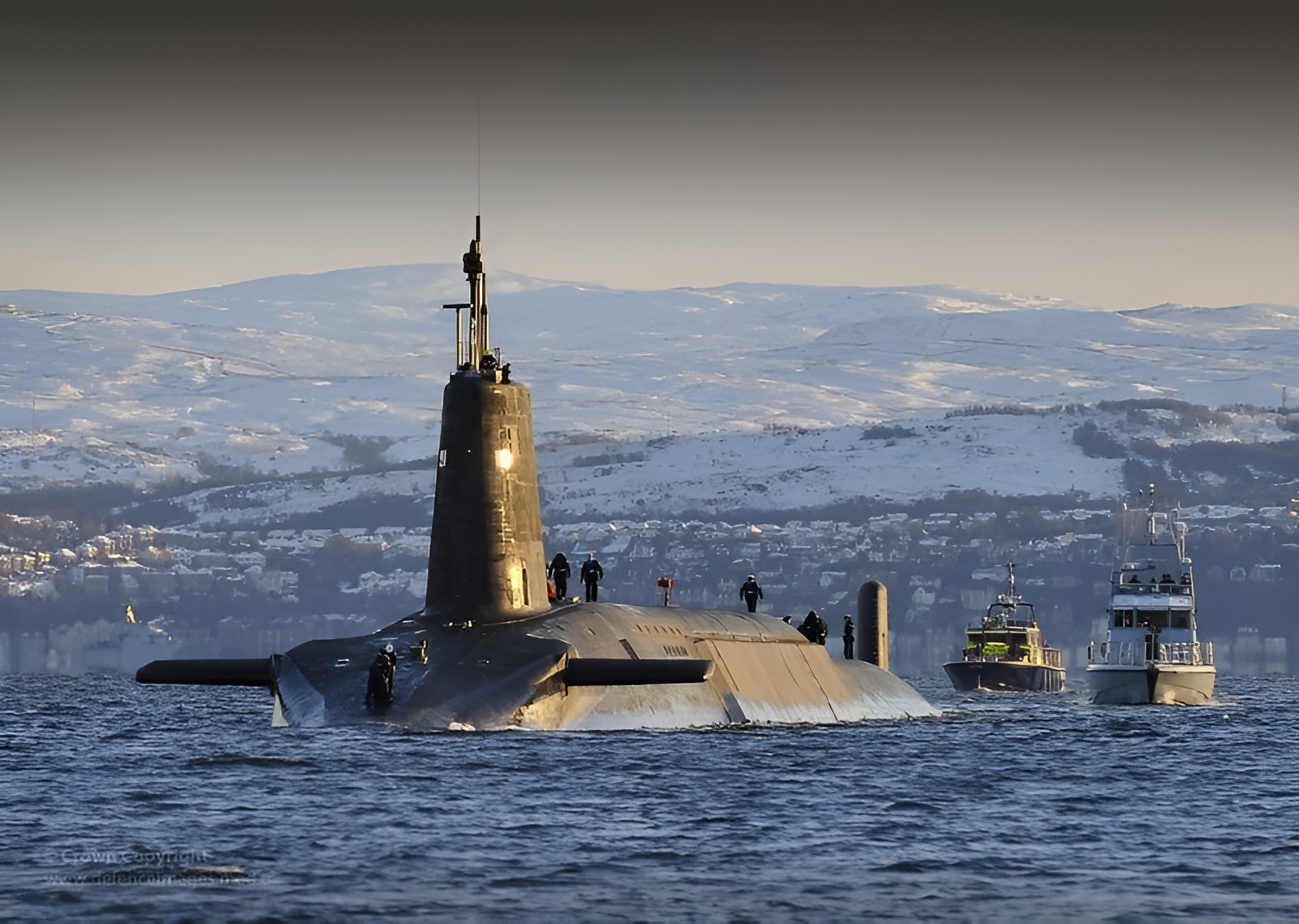
Two hundred and seventeen days is more than seven months at sea and a publicly reported record for a Royal Navy nuclear-deterrent patrol. HMS Vengeance returned to Faslane on November 16 after sailing from the Scottish base on April 12, completing a deployment that kept Britain’s Continuous At-Sea Deterrence operating while placing an extraordinary demand on its crew and ageing machinery.

The completed patrol surpassed the previous reported record of 205 days, set earlier in 2026. Its duration was reportedly extended by at least a week after the replacement submarine returned to Faslane with an unspecified technical issue. No details establishing the nature or seriousness of that issue have been released.
The record is therefore more than a measure of endurance. It illustrates the narrowing margin within a force of four Vanguard-class ballistic-missile submarines, one of which HMS Victorious is undergoing deep maintenance at Devonport. Three Vanguard boats were reportedly at sea during October, offering some rotational flexibility, but the fleet still has little spare capacity when maintenance schedules move or a replacement boat needs assistance.
Long patrols consume engineering margin
A nuclear submarine is designed to operate submerged for extended periods, but time at sea is not free from an engineering perspective. The pressure hull experiences cyclic stresses as the boat changes depth. Reactor pipework, electrical equipment, pumps, atmosphere-control machinery and other life-support systems must keep operating throughout the deployment.
Crews can diagnose and repair many minor defects while underway. A fault that requires dockyard equipment, specialized labor or more extensive access can instead force a submarine back to base. With only a few boats available, that becomes both a maintenance problem and a threat to the continuity of the patrol rotation.
Patrol duration by itself is not evidence that HMS Vengeance operated unsafely, and there is no indication that it exceeded approved limits. The pressure comes from cumulative equipment use, the inspection and servicing that must follow, and the need to prepare the next submarine without eroding its own maintenance window.
The contrast with earlier operations is substantial. Britain’s first continuous-deterrent patrols in the late 1960s generally lasted eight to 12 weeks. Six-month Vanguard deployments have become routine in recent years. For another benchmark not a direct like-for-like comparison the U.S. Navy says its Ohio-class ballistic-missile submarines average 77 days at sea followed by 35 days in port for maintenance. The American fleet also uses alternating Blue and Gold crews, a different operating model supported by 14 Ohio-class boats.
Four older submarines await their replacements
The Vanguard class entered service in the 1990s with a stated 25-year design life. Its oldest boats have now served for more than three decades and are expected to remain operational for up to 40 years as the Dreadnought class enters service.
Keeping the existing fleet available requires life-extension work, detailed inspections and revalidation of safety-critical systems. HMS Victorious entered a £560 million deep-maintenance period in 2023, while an earlier major overhaul of HMS Vanguard lasted seven years before the submarine returned to service in 2022. These are dockyard-intensive projects involving far more than routine replenishment between patrols.
The replacement schedule is central to that burden. The Dreadnought program began four years late in 2010, and construction of the lead submarine is taking at least 15 years. A Treasury value for money study identified expensive Vanguard life extensions and associated operational risks among the consequences of the delay. Until Dreadnought boats begin replacing the older class, every extended Vanguard patrol must be balanced against subsequent inspection, repair and preparation requirements.
The crew carries the other half of the load
HMS Vengeance returned with a crew of about 140 after months of near-total isolation. Contact with family is tightly limited, including short one-way messages. The practical burden extends beyond the submariners to families managing more than seven months of separation without the communication available on an ordinary naval deployment.
The First Sea Lord has called improving submarine maintenance and readiness his highest daily priority. That focus reflects the constraint exposed by the 217-day patrol: the mission was sustained, but only through an exceptionally long deployment by one crew and one submarine. Britain’s deterrent remained continuously at sea; the harder task is restoring enough fleet and dockyard margin that another record is not required simply to preserve the rotation.
| More aerospace and engineering stories, right in your MSN feed. Follow AMI on MSN |
By David Whitaker — Associate editor for AMI’s aerospace and drone systems desk, translating flight systems, aircraft programs, spaceflight, and UAV developments into accessible technical stories.