FAA Freezes New Routers, Returns to 25-Year-Old Equipment After Ground Stop
The Federal Aviation Administration has paused new Juniper router installations and returned to Cisco equipment that has operated for 25 years after a network disruption affected communications and radar signals at 17 of its 22 regional control centers. The agency also disabled the implicated broadcasting function on roughly 60 similar routers while investigators examine the November 13 failure that prompted a nationwide ground stop.
The FAA’s official account of the disruption says excessive data flooded its telecommunications network at a rate of 1,000 connection attempts every four to five seconds. The traffic destabilized aircraft communications and radar feeds, although some frequencies and feeds remained reliable. Approximately 3,500 airborne aircraft landed safely, and normal traffic began resuming after the network was stabilized.
Technicians isolated a radio communications site in El Dorado, Arkansas, where a new router had been installed, and a radar site in Amarillo, Texas, where another router had been installed three weeks earlier. Transportation Secretary Sean Duffy said investigators reproduced what occurred in El Dorado but had not identified the root cause. The equipment is undergoing laboratory testing at L3Harris headquarters.
Reproducing the failure is only the first step
A repeatable failure gives engineers a controlled condition to study, but it does not by itself identify responsibility within the system. The unresolved possibilities span the router hardware, its configuration, the installation procedure and the interaction between new equipment and the legacy network. Each points toward a different corrective action and a different scope of risk.
A hardware defect could call for component-level inspection or replacement. A configuration problem could require revised settings, validation tools and checks across comparable installations. An installation-process failure would shift attention toward work instructions, change control, technician review and acceptance testing. An incompatibility at the boundary with older infrastructure could require broader system testing rather than a correction confined to one device or site.
Hewlett Packard Enterprise, which owns Juniper, said, “Based on what we know today, the device functioned as it was configured to by the installer.” Duffy, meanwhile, said 68 earlier installations involving the same router type had worked properly. Those facts narrow neither the cause nor the affected population enough to resume installations confidently: successful deployments can coexist with a site-specific configuration error, an unusual network state or a latent integration problem triggered only under particular conditions.
The FAA’s immediate response isolating the two locations, disabling the broadcasting function and relying on older routers reduces the chance of an identical recurrence while preserving service. It also exposes the modernization dilemma. The older Cisco equipment provides a known operating baseline, but its age is one reason the communications network needs replacement. The newer equipment cannot deliver its intended benefit until its behavior is validated within the full air-traffic environment, including legacy systems that remain in service during the transition.
An always-on network needs staged assurance
Air-traffic infrastructure cannot be taken offline nationally for a conventional upgrade. New and old equipment must coexist, which makes interface control, rollback planning and representative load testing central safety functions rather than administrative details. A router may operate correctly in isolation and still generate unacceptable effects when connected to an older network with different assumptions about traffic, timing or message handling.
The FAA says it will reevaluate when routine replacement and maintenance work is performed. Timing can reduce the number of flights exposed to disruption, but scheduling alone cannot resolve a technical uncertainty that propagated across most regional control centers. A credible restart plan will need to establish the triggering condition, define a validated configuration, confirm rollback procedures and demonstrate that a local installation cannot again create nationwide instability.
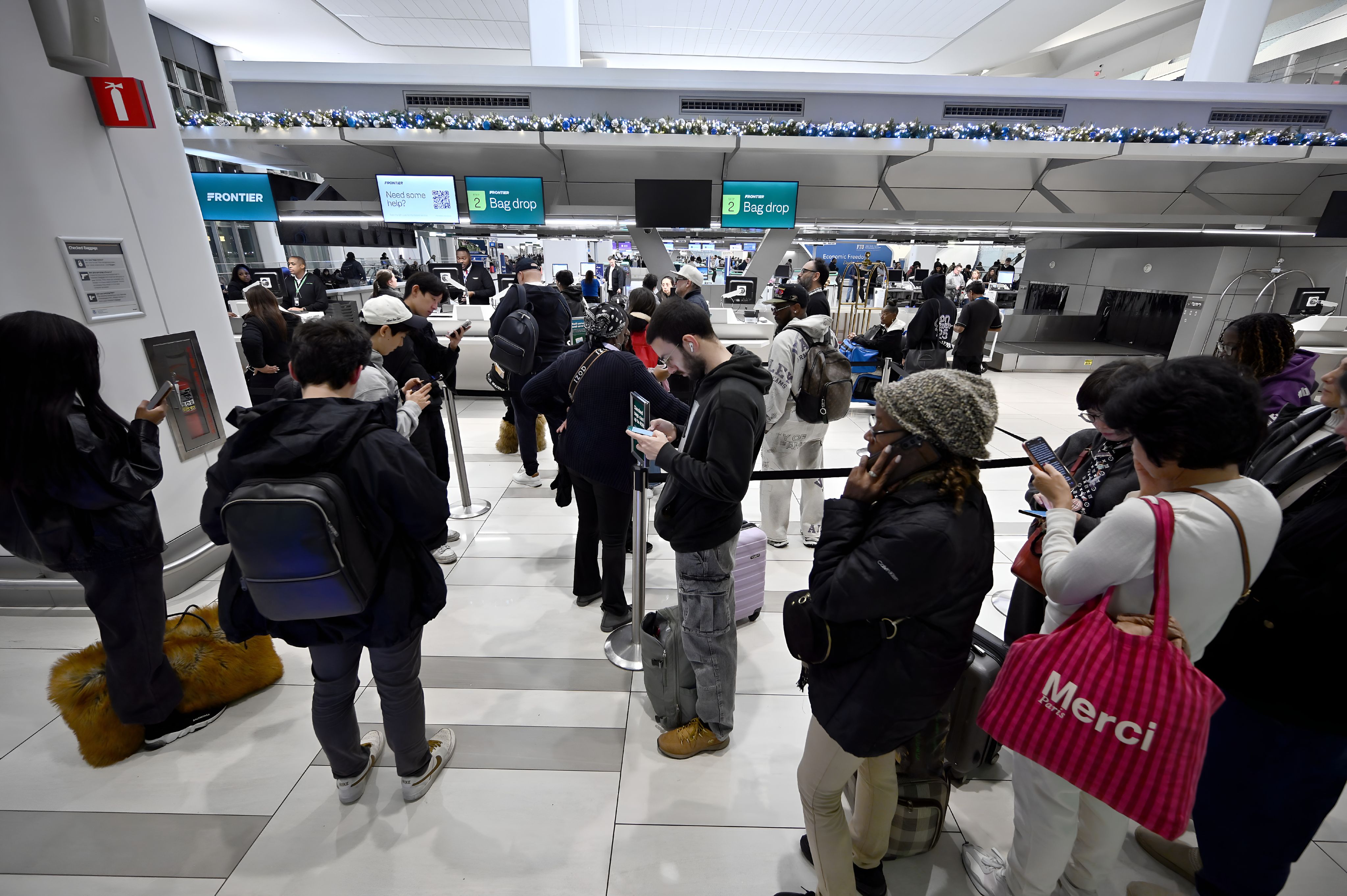
The financial and access consequences extend beyond the equipment itself. The FAA reported approximately 12,462 flight cancellations on November 13, while noting that not all were directly caused by the ground stop. Bernstein estimated that the interruption and recovery cost American Airlines, Delta Air Lines, United Airlines and Southwest Airlines a combined $345 million. Passengers also carried the effects through missed travel and the slow restoration of airline schedules.
That disruption sharpens scrutiny of how modernization money is divided. The administration has requested $50.1 billion for air-traffic and airport improvements, including $10.1 billion for the control system. Congress approved $12.5 billion the previous year to replace outdated technology, with some of that funding also supporting runway and other construction. The engineering priority is therefore tied to a public-cost choice: replacing aging equipment is necessary, but deploying replacements without sufficient system-level assurance can impose substantial costs on travelers and operators.
The next decisive result will come from the laboratory investigation: whether it identifies a defective device, an incorrect configuration, an installation-control failure or an adverse interaction with the legacy network. Until that boundary is established, the FAA’s modernization effort remains caught between equipment old enough to demand replacement and newer equipment not yet cleared to take its place.
| More aerospace and engineering stories, right in your MSN feed. Follow AMI on MSN |
By Thomas Caldwell — AMI’s senior editor for mechanical and mobility engineering, covering vehicle electronics, systems integration, electrification, chassis systems, propulsion, and safety policy.