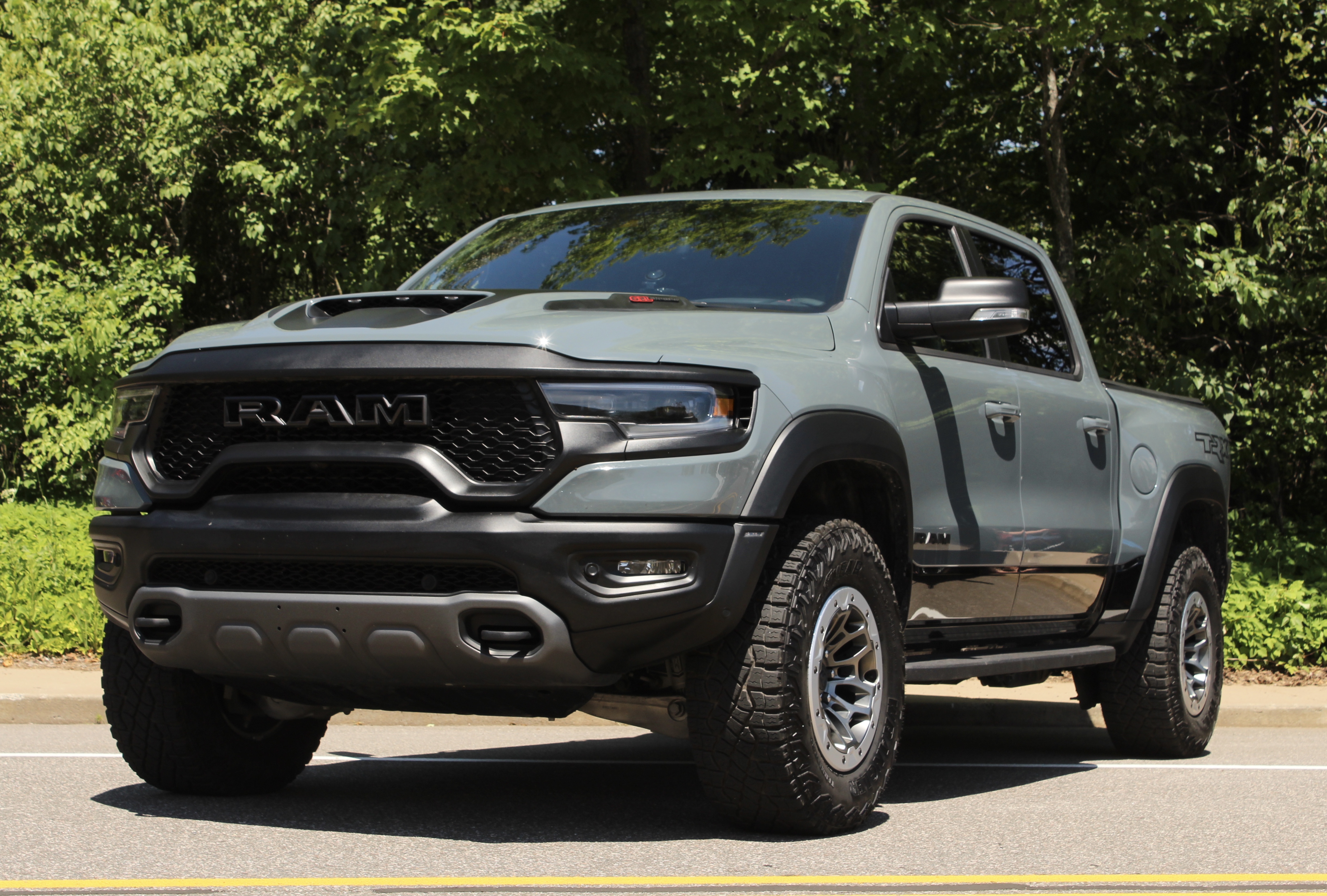
Ram Recalls Nearly 83,000 Pickups That Can Shift Without Braking
A brake-pedal position signal does more than tell a vehicle when the driver intends to slow down. In affected Ram 1500 Classic pickups, software inside the anti-lock braking controller can misread that signal, illuminate the brake lights without pedal input and allow the transmission to move out of Park without the driver pressing the brake. The same fault can take several electronic safety functions offline.

FCA US is recalling nearly 83,000 Ram 1500 Classic trucks from the 2022 through 2024 model years under recall 26V756. The affected pickups were assembled between September 12, 2022, and October 2, 2024. Dealers will reprogram installed factory and replacement anti-lock braking modules at no charge.
One input connects several vehicle systems
The anti-lock braking controller receives data from the brake-pedal position sensor. Its software is supposed to adapt as the relationship between the pedal and sensor changes with vehicle age. In the recalled trucks, that adaptation may not work as intended, leaving the controller to interpret a pedal-position mismatch incorrectly.
The documentation does not identify what causes the underlying pedal-to-sensor drift. The software defect concerns the controller’s response to that changing relationship, rather than an established cause of the drift itself.
This distinction helps explain why the consequences extend beyond anti-lock braking. Modern vehicle controllers share signals across multiple functions. Brake-pedal status can influence exterior lighting, the transmission’s shift interlock, cruise control and driver-assistance systems. If the controller treats a mismatched reading as a fault or as brake application, several systems can respond at once.
Affected trucks may show a service brake system message or warning lights associated with electronic stability control, autopark or forward-collision warning. Those three functions can become unavailable, and cruise control may stop operating. The brake lights may remain illuminated even when the driver is not pressing the pedal, reducing the clarity of a basic signal to following traffic.
The Park interlock is a deliberate safety layer
The ability to shift without pressing the brake reaches beyond feature availability. A brake-transmission shift interlock is intended to prevent an automatic transmission from being moved out of Park unless the service brake is applied. Federal Motor Vehicle Safety Standard No. 114 includes that requirement as a rollaway-prevention measure.
In a previous interpretation of the federal shift-interlock rule, the National Highway Traffic Safety Administration explained that the safeguard is designed in part to prevent an occupant, particularly an unattended child, from inadvertently shifting a vehicle out of Park. The Ram recall addresses a defect that can remove that expected barrier, although the supplied recall information does not characterize the campaign as a formal finding of noncompliance with the standard.
The failure pattern also illustrates a systems-integration tradeoff. Sharing a pedal signal allows multiple controllers to coordinate braking, stability management, collision warnings and transmission logic. It can reduce duplicate sensing and support consistent vehicle behavior. The corresponding risk is that incorrect interpretation at a common control point can propagate into functions that drivers may regard as separate.
Complaint and service data prompted wider action
NHTSA began examining the issue after receiving seven owner questionnaires alleging continuously illuminated brake lights and loss of electronic stability control. By October 21, 2026, FCA US had identified 6,001 warranty claims, 5,310 other service records, 48 field reports and 12 customer-assistance records potentially related to the concern. Stellantis North America was aware of one potentially related accident with no injuries.
Those categories are broader than confirmed defect cases: the records were identified as potentially related. Their volume nevertheless gives the recall a larger service and access dimension. Owners need dealership programming rather than a mechanical replacement in the typical installed-module case, which limits parts demand but still requires scheduling and workshop access. The repair is free, so owners are not expected to bear the direct programming cost.
Dealers are scheduled to receive notification by November 26, 2026, while owner letters are planned for January 14, 2027. That gap makes vehicle-specific identification important because model year alone does not determine whether an individual truck is included. Owners can use NHTSA’s recall resources to check a vehicle identification number for open campaigns.
The action also reaches beyond complete trucks. A related Mopar campaign covers 669 replacement anti-lock braking modules carrying the same software version. Installed replacement modules will be reprogrammed without charge, while Chrysler will repurchase affected modules that have not yet been installed. That inventory step prevents the same software from being introduced during a later repair the final systems boundary needed when a defect exists in both factory equipment and the service-parts pipeline.
| More aerospace and engineering stories, right in your MSN feed. Follow AMI on MSN |
By Thomas Caldwell — AMI’s senior editor for mechanical and mobility engineering, covering vehicle electronics, systems integration, electrification, chassis systems, propulsion, and safety policy.