GE Aerospace Links Powder, Machines and Inspection to Stabilize GE9X Blade Production
A GE9X low-pressure turbine blade begins as more than a digital geometry file. Its production depends on titanium aluminide powder with controlled properties, an electron-beam machine operating within a qualified process window, repeatable factory conditions and inspection capacity sufficient to assess the finished hardware. GE Aerospace has connected those elements across its additive-manufacturing network rather than treating printing as an isolated factory step.

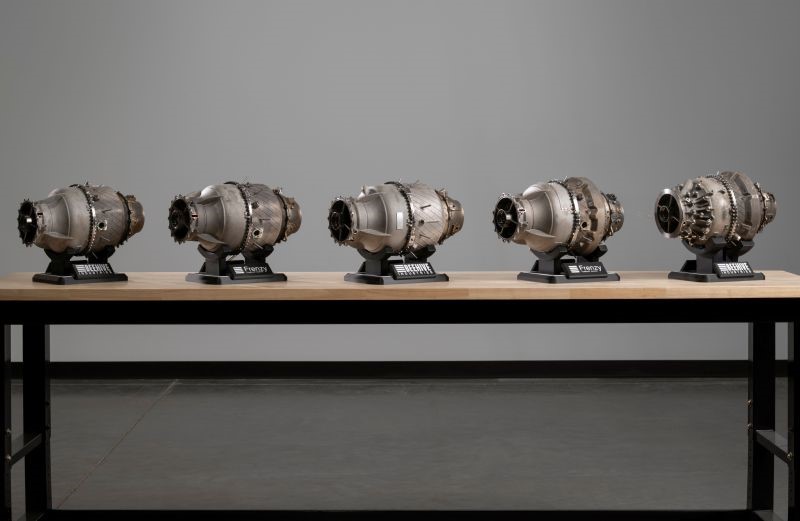
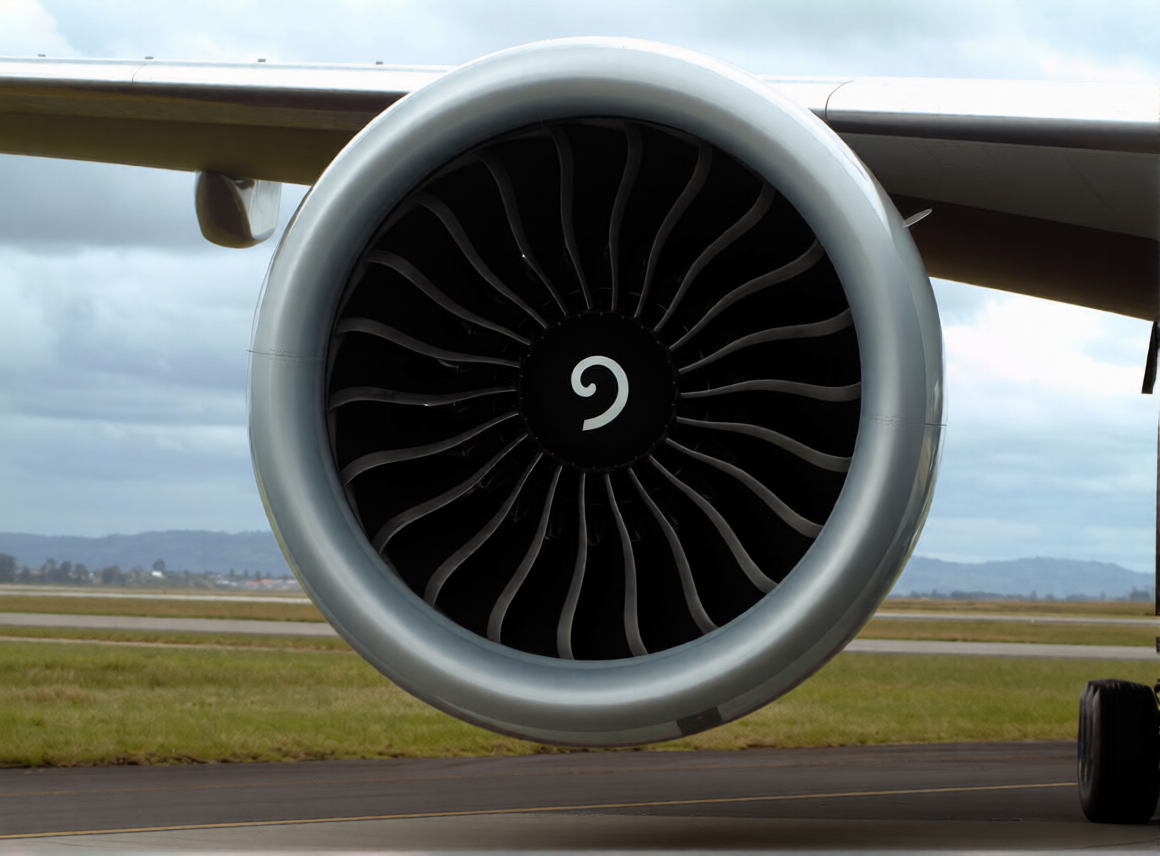
The resulting system supports production of titanium aluminide blades for the GE9X commercial aircraft engine, which received Federal Aviation Administration certification in September 2020. The blades are produced at Avio Aero’s Cameri plant in Italy on Colibrium Additive equipment, using titanium aluminide powder supplied by AP&C and a process known as electron beam powder bed fusion.
Powder and machine behavior are coupled
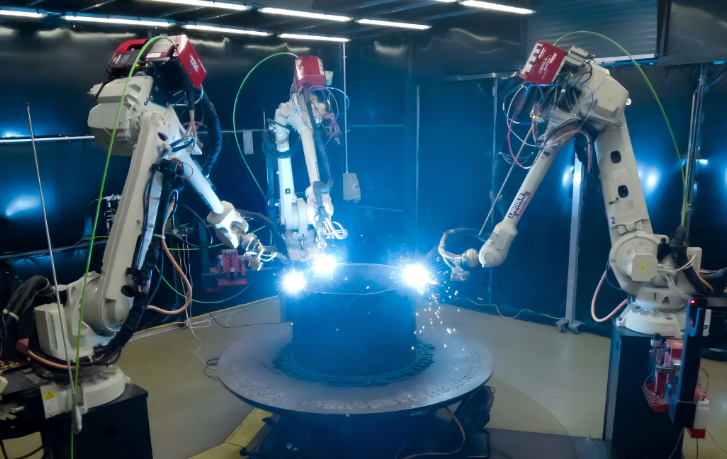
In powder bed fusion, a machine builds a component layer by layer from metal powder. Cameri’s process uses an electron beam as the energy source. For titanium aluminide, thermal management is particularly important because the material offers low mass and high-temperature capability but is also brittle and difficult to process by conventional routes.
Earlier development work at Cameri showed why equipment and material cannot be qualified independently in practice. Initial laser-based attempts produced blades that cracked when separated from their build platform. Work with electron-beam equipment included changes to machine design and powder-layer thickness, while preheating the powder helped reduce residual stress in completed parts.
That history points to the central production constraint: a change in powder characteristics or machine behavior can affect qualified output. Stable production therefore requires control of feedstock, equipment, process parameters and factory practice as one connected manufacturing chain. Dario Mantegazza, Avio Aero’s chief manufacturing engineer, describes the operating priorities as safety, quality, delivery and consistency before productivity and cost.
AP&C supplies the metal powder, Colibrium Additive provides machine expertise, and Avio Aero runs the component manufacturing operation. The wider network also includes the Turin Additive Laboratory, Avio Aero’s Brindisi facility and Colibrium teams in Europe, Canada and the United States. Mantegazza has said production of this titanium aluminide rotating hardware simply would not be possible without close cooperation across our global additive teams.
Low mass does not remove the production burden
Avio Aero says the titanium aluminide blades are nearly half the weight of conventional nickel-alloy blades. Lower blade mass is valuable in a rotating turbine assembly because it reduces the load that associated structures must manage. GE Aerospace also attributes improved GE9X fuel efficiency relative to the GE90-115B-powered aircraft generation to the engine’s wider package of materials and design technologies.
That distinction matters: no separate fuel-burn contribution has been published for the additive blades alone. Their demonstrated manufacturing value is the ability to produce difficult titanium aluminide geometry for an FAA-certified U.S. commercial propulsion program, not a stand-alone efficiency percentage.
The Turin Additive Laboratory, established by Avio Aero and the Polytechnic University of Turin in 2017, addresses the gap between laboratory research and industrial output. Its work covers productivity, efficiency and component cost, allowing process developments to be tested before transfer into production.
One example is the joint Flight Deck project involving AP&C, Avio Aero, Colibrium Additive and GE Aerospace. The project reduced powder losses while improving manufacturing cost and sustainability performance. No reduction figures have been disclosed, but the project’s cross-company structure is mechanically significant: powder handling, machine operation and part production were treated as linked sources of process performance.
Inspection capacity sets another limit
Printing additional parts is not sufficient if inspection becomes a bottleneck. GE Aerospace is applying artificial intelligence to accelerate analysis of inspection images, while human specialists retain final decision authority. According to Andrea Palumbo, the software supports the review process rather than replacing the expert responsible for disposition.
This arrangement preserves human judgment while directing automation toward a time-consuming data task. It also shows why aerospace additive manufacturing scales differently from less regulated printing applications: machine throughput must be matched by powder controls, process engineering and inspection resources.
Cameri has operated as an industrial additive facility since 2013, but its GE9X role is not defined by printers alone. The durable production asset is the controlled chain running from powder manufacture and machine development through process transfer and human-led inspection. If any one link cannot hold a repeatable standard, additional printing capacity cannot by itself produce acceptable engine hardware.
By Edward Collins — Senior editor for AMI’s performance systems and mechanical design coverage, focused on powertrains, drivetrain systems, manufacturing precision, materials, and high-performance engineering.