Amazon Slows Satellite Production Despite Record Global Rocket Launch Activity
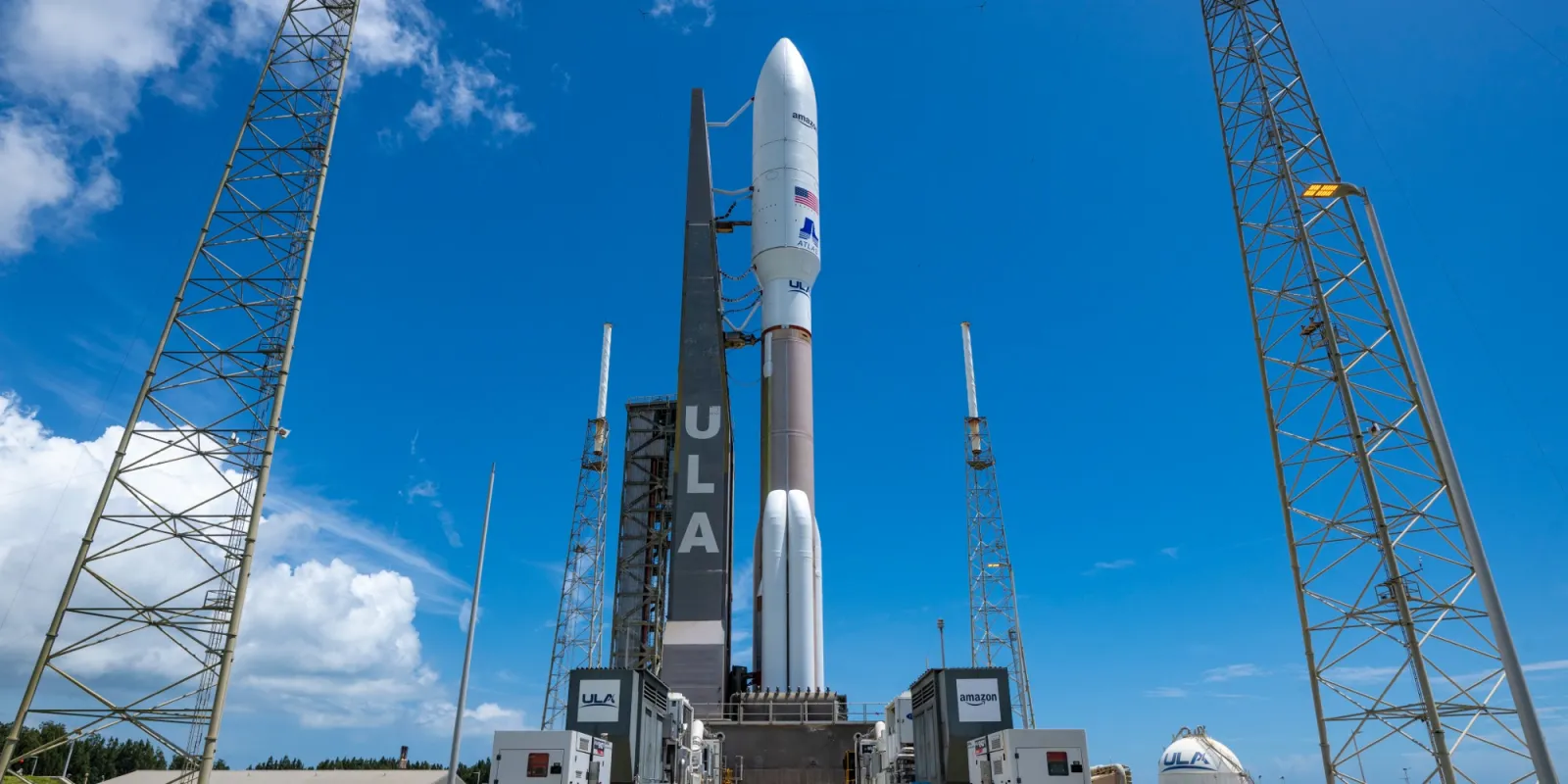
The commercial space industry has rarely launched so many rockets, yet Amazon has slowed production of satellites for its low-Earth-orbit network because few of the dozens of launches it booked roughly five years ago are ready. That contradiction is now defining the launch market: record global activity does not necessarily give a constellation operator the right rocket, payload accommodation and mission date.
An average of 270 orbital rockets launched from Earth annually over the last three years, more than three times the rate recorded a decade earlier. Launches have also become more frequent, competitively priced and accessible. But that aggregate figure combines missions across different countries, vehicle classes, customers and payload requirements. Operators cannot treat all 270 as interchangeable seats on a common transportation network.
The practical measure of capacity is whether a compatible vehicle can carry a particular spacecraft to the required orbit on a schedule aligned with satellite production and service commitments. A rocket may be included in the global total while being unavailable to a U.S. commercial operator, committed to another customer or unsuitable for the payload’s mass, dimensions or deployment plan.
That distinction explains why launch bookings have become valuable even before firm mission dates are available. Canada’s Telesat has booked 11 Falcon 9 missions for its new constellation. Other companies asked whether Telesat would share some of those launches, but Telesat declined. The requests do not quantify the entire market shortage, but they show how operators are searching for access within capacity already reserved by others.
AST SpaceMobile has described launch availability as the pacing item for deployment of its constellation. The company has launches booked with two providers, but the vehicles do not offer identical deployment capacity. Falcon 9 can carry three of AST SpaceMobile’s BlueBird satellites on one mission, while the company’s plan has assigned as many as eight to the larger New Glenn. That means substituting one rocket for another can change the number of missions required and the pace at which a constellation reaches useful scale.
This is also why a satellite factory cannot be managed independently of the launch manifest. Continuing to build spacecraft at full speed when missions are not ready can create an expanding inventory of completed hardware awaiting transport. Slowing production reduces that mismatch, but it also pushes the manufacturing schedule behind the service plan. Launch availability effectively becomes the clock governing factory output.
Amazon’s schedule pressure has already reached the regulatory side of its deployment. The Federal Communications Commission waived the requirement for Amazon to have half of its planned 3,232 satellites in orbit by July 30, 2026. The regulatory reprieve removed that intermediate deadline, although the July 2029 deadline for deploying the full first-generation constellation remains. The waiver buys time, but it does not create launch vehicles or mission slots.
More rockets under development could widen the market, but proposed cadence is not the same as flight-proven, schedulable capacity. For example, the FAA’s completed environmental review covers up to 25 annual Starship and Super Heavy orbital launches from Boca Chica. SpaceX must still hold the applicable vehicle operator license for its operations. An authorized ceiling therefore should not be read as 25 missions immediately available to constellation customers.
Demand forecasts indicate that the scheduling problem may outlast the current backlog. Analysys Mason forecasts that more than 37,000 satellites will require launch from 2023 through 2033, while the Commercial Space Federation predicts demand for thousands of satellite launches annually within a decade. Those are projections, not completed missions, and they do not establish a vehicle-by-vehicle shortage. They do show the scale that providers would have to serve if planned constellations proceed.
Caleb Henry, director of research at Quilty Space, characterized what he has heard from satellite operators as “an industry in panic.” That description is attributed industry commentary rather than a measured finding across every operator. Still, the documented responses requests for Telesat’s reserved missions, Amazon’s production slowdown and AST SpaceMobile’s launch-paced deployment point to the same operational constraint.
The market discussion is consequently shifting from how many U.S. launch companies demand might support to which providers can execute quickly enough. Conditions may worsen over the next two to four years, although no detailed vehicle-by-vehicle forecast establishes exactly how that period will unfold. Until additional rockets become dependable, regularly scheduled services, the industry’s headline launch count will remain a poor proxy for what constellation builders need most: a compatible vehicle ready when their satellites are.
By David Whitaker — Associate editor for AMI’s aerospace and drone systems desk, translating flight systems, aircraft programs, spaceflight, and UAV developments into accessible technical stories.