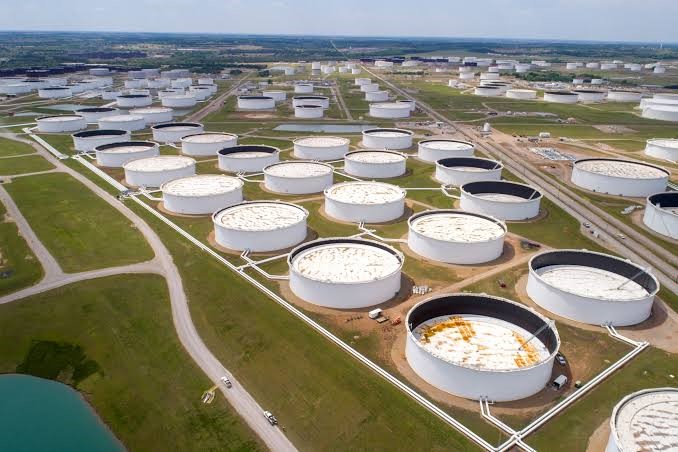
U.S. Strategic Petroleum Reserve Heads Below Operating Floor at 243 Million Barrels
The U.S. Strategic Petroleum Reserve can still contain hundreds of millions of barrels and yet become less effective as an emergency system. After the current drawdown, the reserve is projected to hold about 243 million barrels below the 250 million-to-300 million-barrel range that Texas A&M petroleum engineering professor Siddharth Misra identifies as its practical operating floor. The Department of Energy maintains an official Strategic Petroleum Reserve inventory page as the withdrawal continues.
That distinction between reported inventory and usable emergency capability is central. At roughly 243 million barrels, the reserve would be below 300 million for the first time since 1983. Misra said operation below his estimated floor puts “cavern integrity and overall operational capability” at elevated risk. No cavern collapse has been reported during this drawdown, and the warning should not be read as a prediction that one is certain.
Oil withdrawal changes the caverns themselves
The reserve, established in 1975, stores crude oil in 60 underground salt caverns in Louisiana and Texas. Operators do not simply drain those caverns through gravity. They pump water into the bottom, displacing the less-dense oil upward through extraction wells and into surface pipelines.
That process means the maximum possible barrel count is not the same as useful emergency capacity. About 70 million barrels must remain to keep extraction pipes submerged in oil, according to the Energy Department and Misra. Although that figure is described as a physical minimum, it effectively represents empty from an operating perspective rather than an additional 70 million barrels available for normal withdrawal.
Performance can deteriorate well before that point. As the oil layer becomes thinner, sludge accumulated in the cavern can move closer to extraction intakes. Misra said that condition can constrain rapid pumping, precisely the capability that matters when a supply interruption requires large volumes on a compressed schedule. The Energy Department lists a maximum nominal withdrawal capability of 4.4 million barrels per day, but its public guidance also notes that pumping rates decline as caverns are emptied.
A full cavern is not necessarily an unchanged cavern
Energy Department spokesman Ben Dietderich disputes the implication that falling oil inventory leaves open underground voids. “The caverns are always full. All that changes is the ratio of oil and water that is filling them,” he said, adding that the reserve is being managed responsibly. That is an important clarification: oil removal does not create an empty chamber because injected water replaces the withdrawn volume.
But total fluid volume is only one part of the engineering question. Fresh water dissolves salt, which is the same basic solution-mining process used to create the caverns. Misra said rapid withdrawals can flatten cavern roofs and thin the salt pillars separating adjacent caverns. A Government Accountability Office assessment cited in the reporting likewise found that every drawdown cycle expands cavern volume and reduces spacing within a salt dome, although most caverns examined after the 2022 drawdown were found to be in very good condition.
The concern is therefore cumulative geometry and equipment condition, not simply whether a cavern contains fluid. The storage system was designed for five complete drawdown-and-refill cycles, yet it has been tapped dozens of times over four decades. Those withdrawals were not all complete cycles, but repeated injection and extraction can leach the same portions of a cavern and produce less desirable shapes over time.
The reserve’s mission depends on flow rate
For emergency planners, 243 million barrels on paper does not guarantee that all of those barrels can be delivered at the rate or timing a future disruption might demand. A slower withdrawal curve, sludge near intakes, construction outages or unavailable caverns can reduce deployable capacity even while the national inventory still appears substantial.
Federal law also recognizes that inventory levels can constrain certain uses. Department of Energy guidance says a limited drawdown cannot be ordered if fewer than 252.4 million barrels remain, although separate authority governs a full drawdown for a severe energy-supply interruption. The projected 243 million-barrel level would sit below that limited-drawdown threshold as well as Misra’s estimated engineering floor.
The unresolved issue is not whether the reserve reaches a literal zero. It is how much oil must remain to preserve fast pumping, submerged equipment and stable cavern geometry for the next emergency. At 243 million barrels, that operating margin not the headline inventory alone becomes the critical measure of readiness.
| More aerospace and engineering stories, right in your MSN feed. Follow AMI on MSN |
By Thomas Caldwell — AMI’s senior editor for mechanical and mobility engineering, covering vehicle electronics, systems integration, electrification, chassis systems, propulsion, and safety policy.