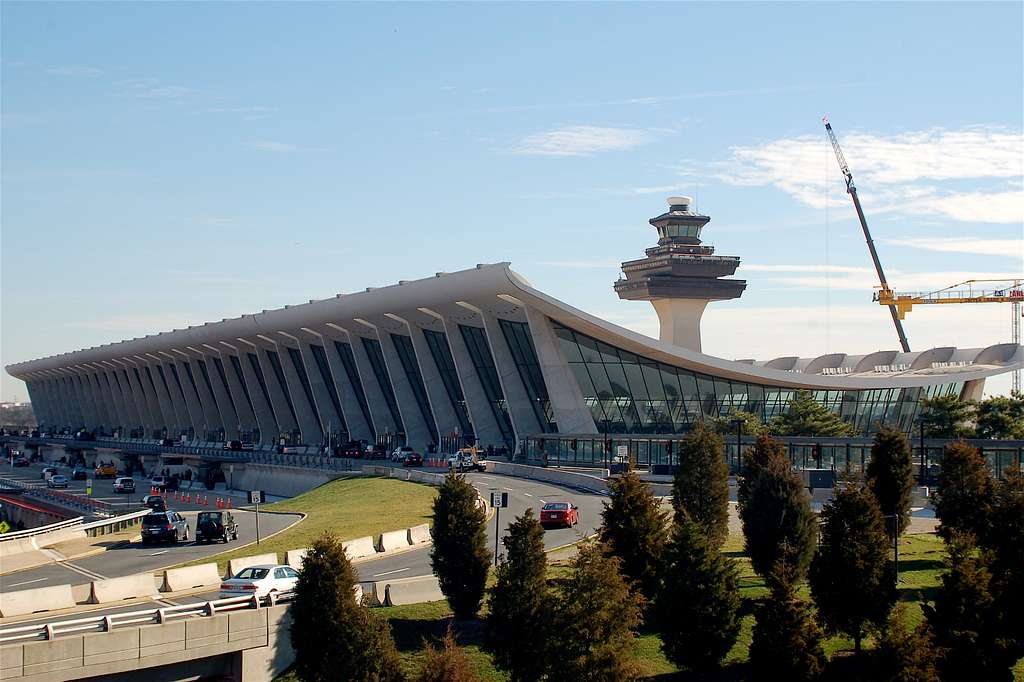
Dulles Board Approves $15.5 Billion Toward $20 Billion Airport Overhaul
$15.5 billion is the amount approved by the Metropolitan Washington Airports Authority board to advance a proposed overhaul of Dulles International Airport. The wider plan is estimated at more than $20 billion and would add or renovate terminals, concourses and passenger-transport infrastructure across the Virginia airport. Dulles describes the planned scope as more than 5 million square feet on its official transformation project page.

The scale of the board action should not be confused with a completed financing package or authorization to begin every proposed construction element. The program is expected to be delivered through multiple packages, and significant questions remain about bond issuance, environmental review, design integration and construction sequencing. No completion date has been established for the entire overhaul.
Most of the financing would come from airport revenue bonds
The financial plan includes approximately $14.2 billion in future airport revenue bond sales, $1.23 billion in future passenger-facility charges and $150 million in grants. The board also authorized $48 million for immediate planning through the end of the year. Airport authority CEO Jack Potter has said the renovation would not require federal funding.
That distinction matters, but it does not make the project cost-free to airport users. Municipal bonds generally allow public airport authorities to borrow at lower interest rates than private companies, with repayment supported by airport-generated revenue. Airlines also pay airport charges that are commonly measured as cost per departing passenger, while passenger-facility charges can be incorporated into travelers’ ticket costs.
Current planning projects Dulles’ airline cost per departing passenger could rise from $12.77 to as much as $65 by 2040. Airport officials believe that level would remain competitive, but the projection depends on future traffic, airline participation and commercial revenue. Higher airport charges can create a tradeoff: they finance capacity and improved facilities, but they can also affect airlines’ route economics and, potentially, the cost and availability of service.
A $3.75 billion package would change how passengers cross Dulles
One of the most visible proposals is a $3.75 billion passenger-transport package intended to expand the underground AeroTrain network and phase out Dulles’ bus-like mobile lounges. The broader concept also includes a central walking connection between concourses. For passengers, the objective is a more continuous route from the main terminal to gates, customs processing and connecting flights.
Dulles currently uses both fixed and flexible transport systems. Its automated AeroTrain serves the main terminal and Concourses A, B and C, but it has no station at Concourse D. Mobile lounges consequently provide routine service to Concourse D and can be reassigned when demand changes or when AeroTrain service is unavailable.
Replacing those vehicles with underground infrastructure purchases greater integration and potentially better walkability, but it also exchanges operational flexibility for a fixed system. Tunnels, stations and automated trains must be sized for passenger peaks, connected to secure circulation routes and maintained without cutting off access to active concourses. The available plans do not yet establish tunnel routes, capacity, travel-time effects or how backup transportation would work during an outage.
International arrivals add another systems constraint. Dulles uses controlled passenger routes to keep arriving international travelers separate until customs processing. Any redesigned transport spine must preserve that separation while integrating baggage claim, baggage recheck and domestic connections. That makes the project more than a tunnel excavation exercise; it is a redesign of passenger, baggage and security flows.
Construction sequencing may be harder than adding floor space
The initial major procurement, known as Package A, is expected to cover work at the main terminal and Concourses A and B. It includes new gates, passenger-processing areas, baggage systems and a post-security connector. A contract award has been targeted for early 2027, with completion in 2034, but that schedule applies to the package rather than the entire $20 billion program.
Much of the enabling infrastructure must be replaced before existing facilities can be removed. That includes baggage equipment, security checkpoints, maintenance facilities, international-arrival functions and the central utility plant. The replacement utility plant, for example, must be commissioned before the current plant can be decommissioned. This sequencing is essential to keeping Dulles operating safely during years of construction.
Environmental and historic-preservation approvals also remain on the critical path for portions of the expansion. Future decisions must reconcile the new $20 billion concept with work already designed or underway, including Concourse E and earlier modernization packages. The board’s $15.5 billion approval moves Dulles into a much larger planning and financing phase, but the decisive engineering milestones will be approved designs, issued bonds and construction packages that show how the airport can be rebuilt without interrupting the passenger system it is meant to improve.
| More aerospace and engineering stories, right in your MSN feed. Follow AMI on MSN |
By Thomas Caldwell — AMI’s senior editor for mechanical and mobility engineering, covering vehicle electronics, systems integration, electrification, chassis systems, propulsion, and safety policy.