Boeing Workers Reject Deal, Authorize Possible Strike That Could Further Delay Two Jets
Boeing is trying to preserve momentum on two aircraft already years behind schedule, but a labor deadline now hangs over the engineering workforce supporting that effort. On August 21, 17,000 engineers and technical workers rejected proposed four-year contracts and authorized union negotiators to call a strike after the current agreements expire October 6.
A strike has not been called, and no work stoppage can begin before the contracts expire. Still, the vote creates a capacity risk for certification campaigns involving the 737 MAX 10 and 777-9. Both aircraft are already delayed, and a stoppage could further disrupt the engineering and technical work needed to advance their approval and delivery plans.
Members of the Society of Professional Engineering Employees in Aerospace, or SPEEA, voted separately in professional and technical bargaining units. Engineers rejected the tentative agreement by 64.25%, while 71.9% of technical workers voted against their offer. The union’s published professional-unit results also show that 87.82% authorized a strike. Technical workers approved strike authorization by 89.7%.
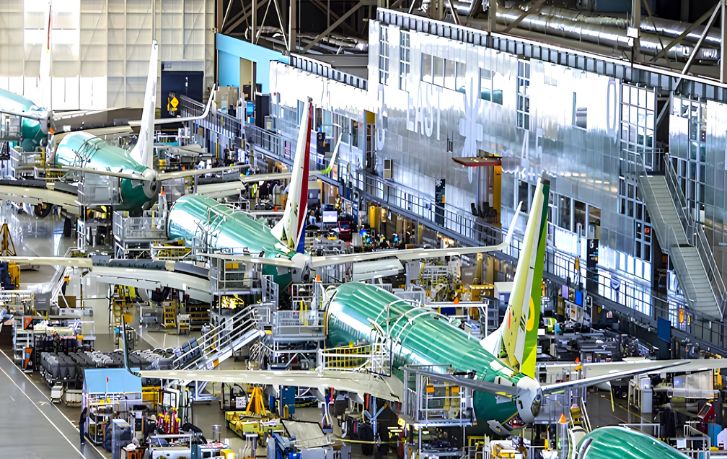
The immediate issue is not simply whether Boeing can keep an assembly line moving. Engineers, analysts, designers, technicians, planners and other specialists represent a different part of the aircraft-development pipeline. Certification programs depend on sustained technical capacity to complete engineering work, address findings and support the documentation and coordination surrounding regulatory approval. Losing access to a large share of that workforce would not guarantee another schedule slip, but it would reduce flexibility in programs that have little schedule margin to spare.
The wage offer did not settle the inflation concern
Boeing characterized its proposal as the largest wage increase for these workers in 40 years. SPEEA negotiators said the offer included aggregate wage-pool increases of 29.4% across four years, along with additional paid leave, lower limits on mandatory overtime and more opportunities for virtual work.
Members nevertheless raised concerns about how individual pay would track local costs and aerospace-market compensation. The proposed contract included minimum annual increases linked to inflation but capped at 3%, plus raises tied to individual performance and other Boeing-determined measures. Seattle-area consumer prices rose 4.5% over the year covered by July federal data, creating a visible gap between that inflation figure and the proposed cap.
That distinction matters. A multiyear aggregate wage pool can produce a large headline percentage, while the timing, distribution and conditions attached to raises determine what an individual employee receives. Boeing argued that the complete offer would position employees among regional market leaders. The rejection indicates that a decisive share of both bargaining units did not consider the full package sufficient.
The vote also came after an unusually long period without full bargaining for the Northwest units. SPEEA members have not negotiated a new contract since 2012, having approved extensions in 2016 and 2020. The union now plans to survey members about what changes would be necessary to approve a four-year deal, but no new bargaining sessions are scheduled.
Contingency planning cannot erase specialized-capacity risk
Boeing said it was disappointed by the rejection and had begun implementing a strike contingency plan. Ben Nimmergut, Boeing vice president and functional chief engineer for production engineering, said the company would redirect money intended for the union-represented workforce toward preparations for a potential stoppage.
The company has not provided enough detail to assess how much work that plan could preserve. Contingency measures may help protect selected activities, but the scale of the represented workforce limits the conclusions that can be drawn before Boeing explains which certification and production-support functions can continue. Specialized engineering capacity is not measured only by head count; continuity, program knowledge and authority to complete assigned technical work also shape how effectively a development campaign proceeds.
Boeing has recent experience with the broader industrial consequences of labor disruption. About 33,000 machinists struck for seven weeks in 2024, halting Seattle-area commercial-aircraft production. SPEEA members last struck Boeing in 2000, when their stoppage lasted 40 days. Those events involved different bargaining units and cannot establish what would happen this time, but they show why Boeing is preparing before the October deadline.
The next concrete milestone is a return to bargaining. Until talks are scheduled and a revised offer emerges, Boeing must pursue certification progress on the 737 MAX 10 and 777-9 while preparing for the possibility that 17,000 engineers and technical specialists may stop work after October 6.
| More aerospace and engineering stories, right in your MSN feed. Follow AMI on MSN |
By David Whitaker — Associate editor for AMI’s aerospace and drone systems desk, translating flight systems, aircraft programs, spaceflight, and UAV developments into accessible technical stories.