Rainmaker Says Alaska Drones Triggered 19 Million Gallons of Precipitation
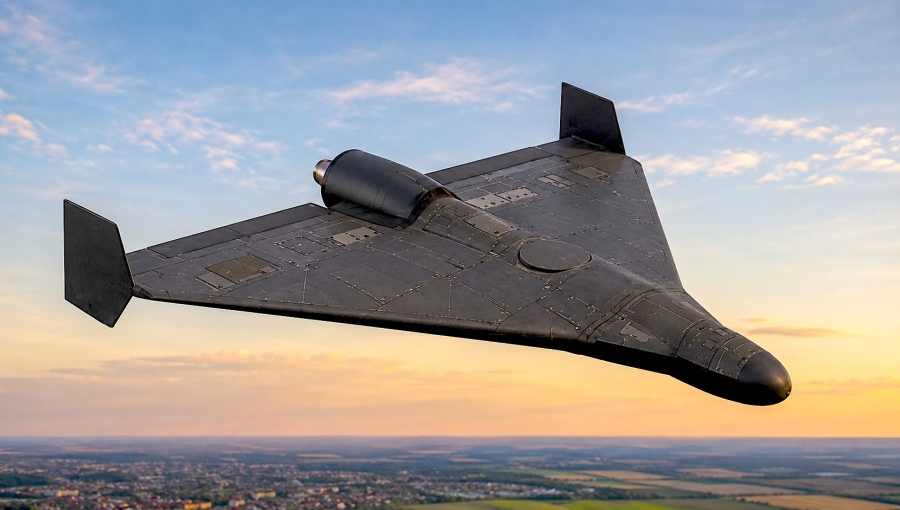
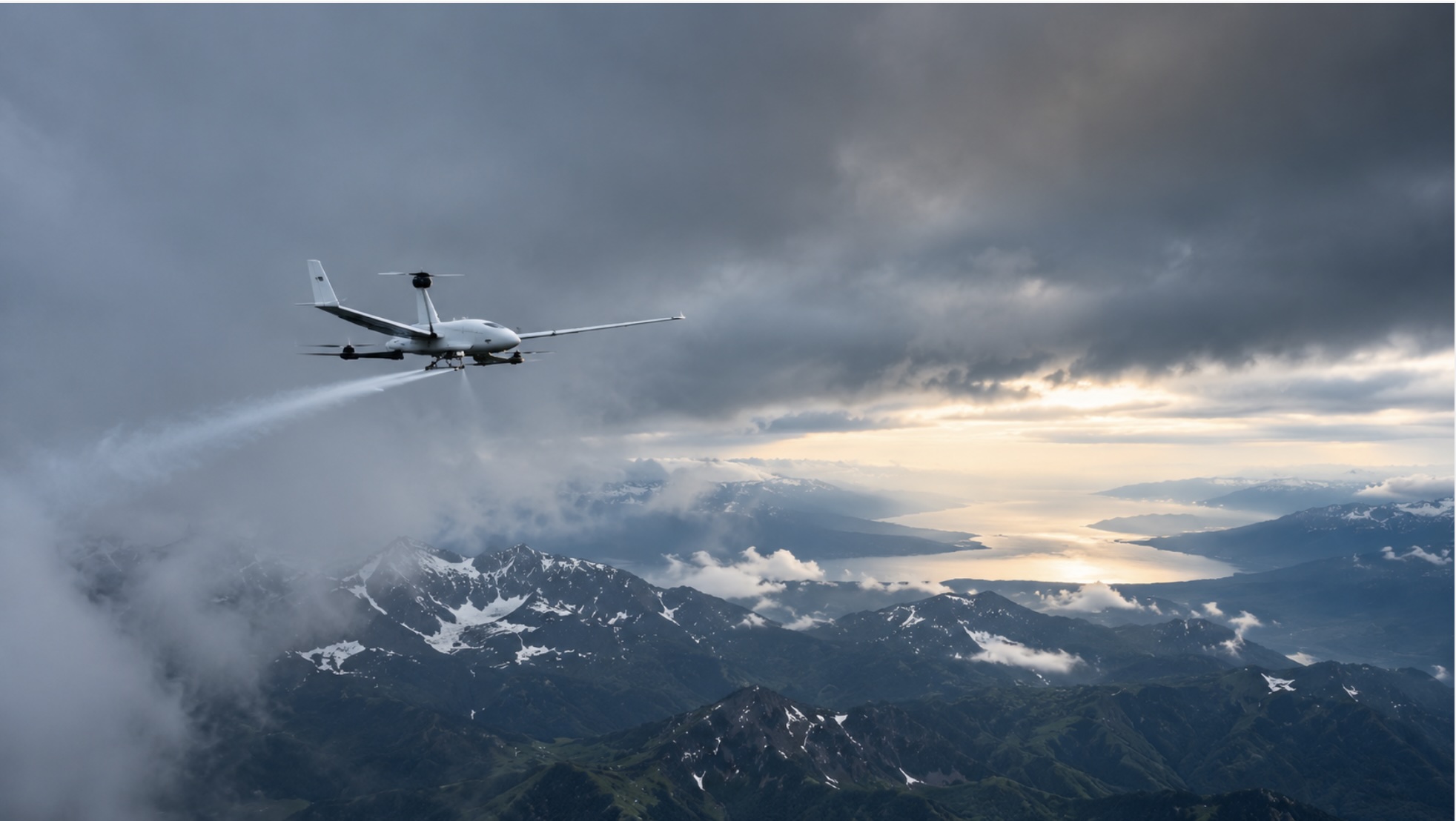
Rainmaker says its cloud-seeding drones caused approximately 19 million gallons of precipitation during a three-hour operation on Alaska’s Kenai Peninsula. The company attributed the mostly snowy output to silver iodide released along controlled flight paths on Aug. 23, although the year was not specified. The figure is Rainmaker’s performance claim, not an independently verified government finding.
The scale sounds more dramatic than the conditions on the ground. Rainmaker founder and CEO Augustus Doricko said the precipitation was spread across nearly 100 square miles, where a person would have experienced no more than drizzle-level conditions. That contrast matters: cloud seeding is intended to extract a modest amount of additional moisture from suitable clouds, not create a major storm from clear skies.
The flight pattern is part of the measurement system
Rainmaker’s most consequential claim is not simply that its drones released cloud-seeding material. It is that the company could distinguish the resulting snowfall from precipitation that would have occurred naturally.
Doricko said the drones flew defined patterns or released silver iodide in pulses, stopping and starting at controlled intervals. Rainmaker then looked for corresponding snowfall patterns on radar. In principle, precipitation appearing along those tracks or at matching intervals gives researchers a recognizable signature to compare with the release sequence.
This approach turns the drone into both a delivery platform and a controlled experimental tool. Repeatable routes and timed releases can provide cleaner boundaries for analysis than simply dispersing material throughout a broad cloud area. Radar supplies the remote-sensing layer needed to follow the resulting precipitation, but the strength of the conclusion still depends on the quality of the radar observations, the attribution method and whether the pattern can be reproduced.
Rainmaker described the operation as the first time a private company had validated a specific quantity of cloud-seeding precipitation in Alaska. Independent review of the company’s data and calculation would be needed to establish the 19-million-gallon estimate beyond Rainmaker’s own analysis.
Cloud seeding needs the right cloud before a drone launches
Silver iodide does not generate cloud moisture. It provides particles that encourage ice formation in clouds already containing supercooled liquid water droplets that remain unfrozen below 32 degrees Fahrenheit. The resulting ice can grow and fall as snow rather than remaining suspended and eventually evaporating.
That operating boundary limits where and when the technology can work. Temperature, available moisture, wind and cloud structure all affect whether a cloud is suitable. The drone may improve control over where and when material is released, but it cannot remove the atmospheric constraints governing the process.
The underlying measurement challenge also predates Rainmaker. University of Illinois emeritus professor Robert Rauber, who was not involved with the company, said the 2017 Seeded and Natural Orographic Wintertime Clouds: The Idaho Experiment known as SNOWIE enabled researchers to validate and quantify precipitation produced by cloud seeding. Radar observations and calculations helped researchers separate mapped seeded plumes from surrounding natural snowfall.
Rainmaker’s controlled tracks and pulses follow the same broad experimental logic: create an identifiable intervention, observe a matching response and quantify the difference. The open question is whether its Alaska data meet a comparable standard of replication and independent scrutiny.
Drones could add flexibility, not a drought cure
Western water managers are interested because mountain snowpack functions as seasonal storage. Snow accumulates during winter and releases water as it melts in spring and summer. Idaho, Utah and Colorado already use cloud seeding in efforts to supplement snowfall and runoff. Idaho’s collaborative cloud-seeding program, for example, combines state support, utility operations and local water-user funding across several mountain regions.
Drones offer a potentially useful manufacturing and control proposition: smaller uncrewed aircraft can execute programmed routes and timed releases without putting a crew aboard the delivery platform. Operational usefulness, however, will depend on reliable deployment, weather tolerance, airspace coordination and consistent measurement across repeated missions not one large volume figure.
Cloud seeding also remains a supplement rather than a standalone response to Western drought. Experts caution that it cannot replace conservation or produce water when suitable clouds are absent. Ten states had banned or considered banning cloud seeding as of a 2024 Government Accountability Office report, while states including Florida and Tennessee have enacted bans.
Doricko said Rainmaker plans to apply its cloud-seeding work to the Colorado River and Great Salt Lake in the coming months. Those operations will provide a more consequential test: whether the company can repeatedly connect controlled drone releases to independently examinable precipitation measurements in water systems where every claimed gallon will face close scrutiny.
| More aerospace and engineering stories, right in your MSN feed. Follow AMI on MSN |
By Stephen Wallace — Editor for AMI’s aerospace integration and unmanned mobility coverage, focused on drone manufacturing, VTOL systems, autonomous networks, and air-ground mobility links.