Brave1 Market Opens 17-Parameter Drone Orders, but Units Fund Purchases
A Ukrainian military unit can now describe the drone it needs across more than 17 parameters and send that requirement to multiple manufacturers through Brave1 Market’s new custom-order feature. Launched on August 20, 2026, the system turns the submitted specifications into competing supplier offers and potentially a direct contract but only if the unit pays from its own funds.
The process starts with requirements rather than a manufacturer’s catalog. A unit enters the desired technical characteristics, quantity and delivery timeframe. Configurable fields include the communications type, camera, payload weight and flight endurance. Units can still purchase serially produced equipment, but the added workflow is intended for requirements that available products do not meet in their standard configurations.
Once submitted, the request is distributed automatically to potential suppliers. Each manufacturer can make an offer or decline to participate. The buyer does not initially see which suppliers responded, and proposals are evaluated using the information entered into the platform. If multiple offers have identical technical specifications, an automated bidding process selects the lowest-priced one. The unit can then sign a direct contract with the selected manufacturer.
Competition depends on comparable specifications
That sequence matters because price competition is meaningful only when bids describe equivalent products. A cheaper drone with different endurance, communications equipment or payload capacity is not necessarily a lower-priced version of the same requirement. Brave1’s approach first compares the technical fields and uses the automated price contest when the specifications completely match.
The structured request also gives suppliers a clearer basis for deciding whether to bid. Instead of receiving an open-ended request for a “custom” aircraft, manufacturers receive a defined set of characteristics, an order quantity and a delivery expectation. That can reduce ambiguity at the offer stage, although the available information does not establish how quickly requests will become completed deliveries.
Brave1 says the digital workflow records interactions and decisions throughout the process. If a unit decides not to complete a purchase, it must provide a justified reason. Buyers and suppliers can also file complaints against one another. Those controls create an auditable procurement record, rather than leaving the selection process entirely in messages or negotiations outside the marketplace.
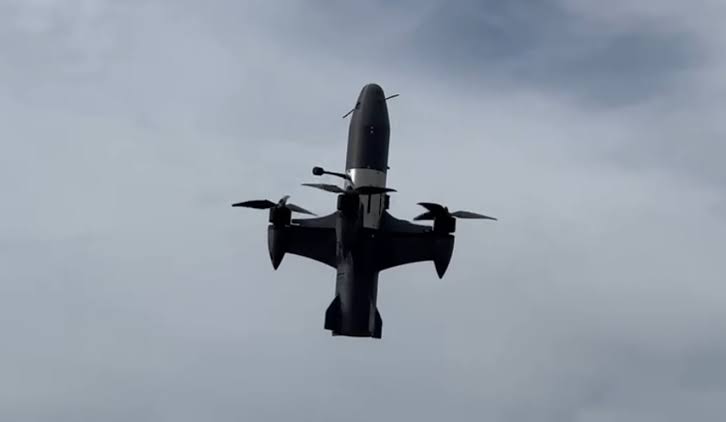
Current custom-order categories include first-person-view drones, fiber-optic first-person-view drones and fixed-wing interceptor drones. These are military unmanned systems, but the significance of the feature is primarily industrial: it connects unit-defined requirements, supplier screening, comparable bids and contracting within one recorded process.
Non-codified systems add flexibility and a boundary
The feature can accommodate systems that have not yet been formally codified. Codification is the administrative and technical process used to confirm that equipment meets military requirements and is eligible for procurement and delivery through established channels. Allowing non-codified products gives units and manufacturers another route for considering less mature or newly configured systems, but it does not mean every proposal has completed that broader approval process.
Brave1 plans to expand custom ordering to additional equipment, including unmanned ground vehicles. That support is not yet available and should be treated as a planned extension rather than a current capability.
The immediate constraint is funding. Custom orders presently must use a military unit’s own funds and cannot be purchased through the eBaly procurement system. That restriction separates the new feature from the larger pool of activity already associated with Brave1 Market: according to Brave1, units placed about $1 billion in defense-technology orders through the marketplace during the first year of its combat-rewards program.
The platform therefore expands control over drone configuration without providing a new funding source. Its practical reach will depend not only on whether manufacturers can satisfy the 17-plus technical fields, but also on which units have money available to turn a recorded request and winning offer into a signed contract.
| More aerospace and engineering stories, right in your MSN feed. Follow AMI on MSN |
By Stephen Wallace — Editor for AMI’s aerospace integration and unmanned mobility coverage, focused on drone manufacturing, VTOL systems, autonomous networks, and air-ground mobility links.