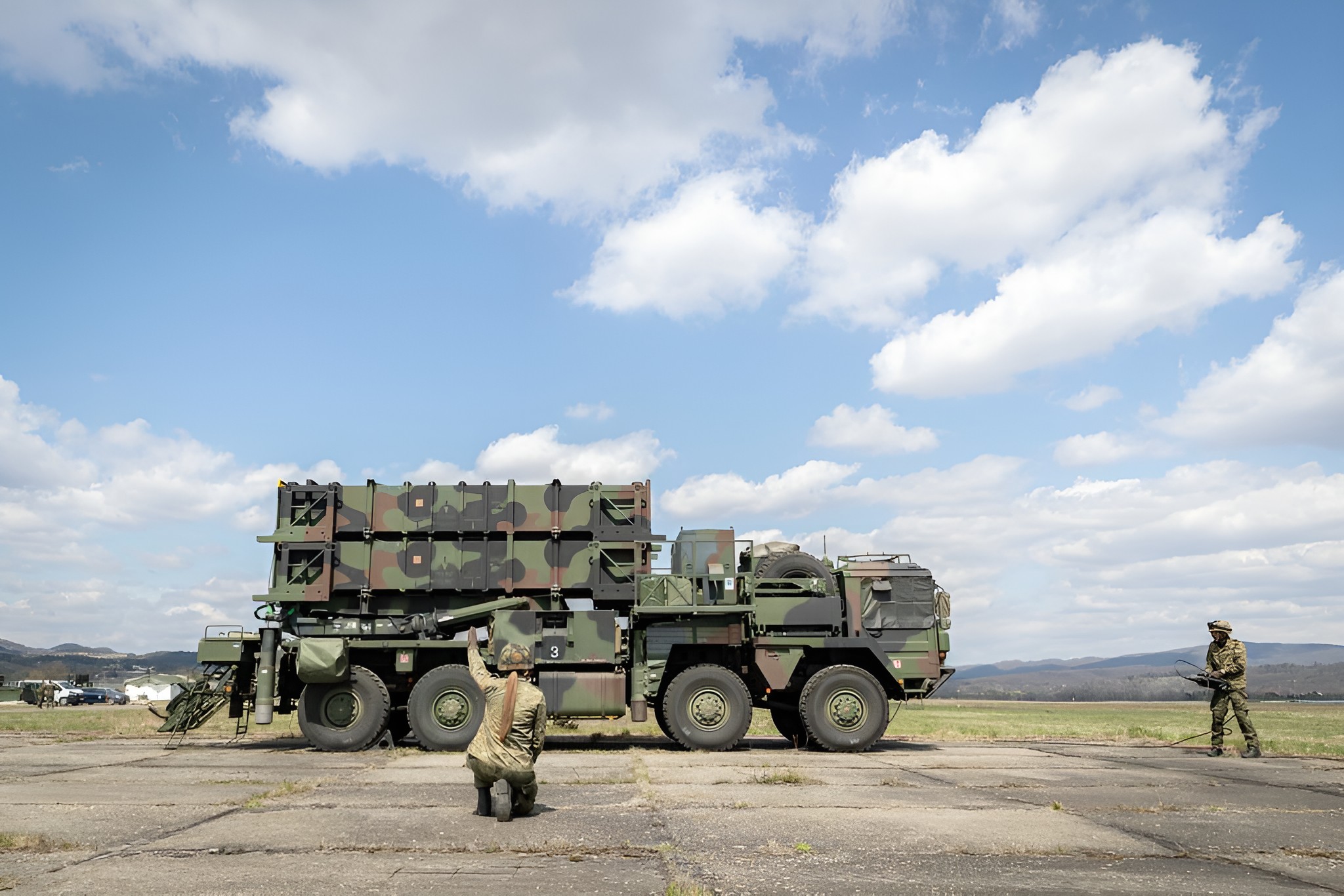
Patriot Production Licenses for Ukraine Reportedly Stalled Despite Senior Signatures
A proposed license to produce Patriot interceptor missiles for Ukraine is reportedly stalled inside the Pentagon, even though senior U.S. officials signed the necessary paperwork in October. Journalist Alex Raufoglu attributed the standstill to two unnamed sources; the Defense Department has not officially commented on the reported delay.

The paperwork is consequential because a production license is the gateway to a larger industrial effort. Without it, the parties cannot move from government approval toward a defined manufacturing arrangement. The delay leaves three essential points unresolved: what Ukraine would be authorized to produce, how much additional capacity the arrangement could create and when any missiles could emerge from it.
The reported status also marks a shift from the more visible momentum around the proposal. Secretary of State Marco Rubio and Defense Secretary Pete Hegseth reportedly signed the documents in October, but their signatures have not carried the licenses through the remaining Pentagon process. The two sources associated the standstill with Michael Duffey’s tenure as under secretary of defense for acquisition and sustainment, although they did not establish why the process stopped or identify any additional approval that may be required.
A license would start a process, not a production line
The Pentagon had publicly described the project as preliminary months before the reported stall. In July, a senior defense official said the department was evaluating options for licensed Patriot production, including where manufacturing would occur, which interceptor variant would be involved and how domestic and international sourcing might be divided.
Those choices determine what the word “production” means in practice. A license could support anything from selected component work or final assembly using imported kits to a broader local supply chain. It would not automatically give Ukraine the ability to manufacture every part of a complete Patriot system, which also includes launchers, radar and command equipment.
The most difficult work would follow the licensing decision. A new manufacturing base would need qualified suppliers, trained personnel, certified processes and parts that meet the required reliability standards. Michael Cadenazzi, the Pentagon’s assistant secretary for industrial policy, said in July that qualifying and certifying an indigenous supply chain would be the hard part. He also noted that the pool of engineers and already-qualified components is limited.
That makes the present standstill more than a paperwork inconvenience, but it does not mean completed missiles are sitting behind an unsigned release. Licensing is an upstream constraint: every month spent resolving the authorization pushes back the supply-chain, certification and production work that would come afterward.
Existing orders show the time scale
A separate U.S. approval illustrates why licensed production is being considered alongside conventional purchases. On October 30, the State Department approved an estimated $2.1 billion sale of 500 Patriot PAC-3 missiles to Ukraine. The missiles have yet to be manufactured and are not expected until the 2030s, according to two people briefed on the decision cited by Reuters.
Lockheed Martin, the principal contractor for that sale, has announced plans to raise annual PAC-3 interceptor production to 2,000 units. The Pentagon has also established a long-term framework intended to support a tripling of production capacity by the end of 2030. Those expansions remain tied to specialized suppliers, including the producers of critical missile components, and their output serves U.S. and allied demand rather than Ukraine alone.
Available inventory figures are less certain. Aviation expert Kostiantyn Kryvolap estimated that Europe has roughly 200 PAC-3 missiles, with some already transferred to Ukraine. He also estimated that Greece holds around 200 PAC-2 missiles and disputed reports assigning Spain a similar total. Those are expert assessments rather than official, audited inventories, so they cannot define precisely how many interceptors are available for transfer.
NATO has confirmed its commitment to strengthening Ukraine’s air defenses with PAC-2 and PAC-3 missiles, while Ukrainian President Volodymyr Zelenskyy has said NATO Secretary General Mark Rutte was prepared to help secure them. That effort addresses current supply through partners. Licensed production would instead be a longer-term capacity project and until the Pentagon process advances, its scope, schedule and industrial starting point remain undefined.
| More aerospace and engineering stories, right in your MSN feed. Follow AMI on MSN |
By David Whitaker — Associate editor for AMI’s aerospace and drone systems desk, translating flight systems, aircraft programs, spaceflight, and UAV developments into accessible technical stories.