USS George H.W. Bush Deployment Could Last a Year, Through Holidays
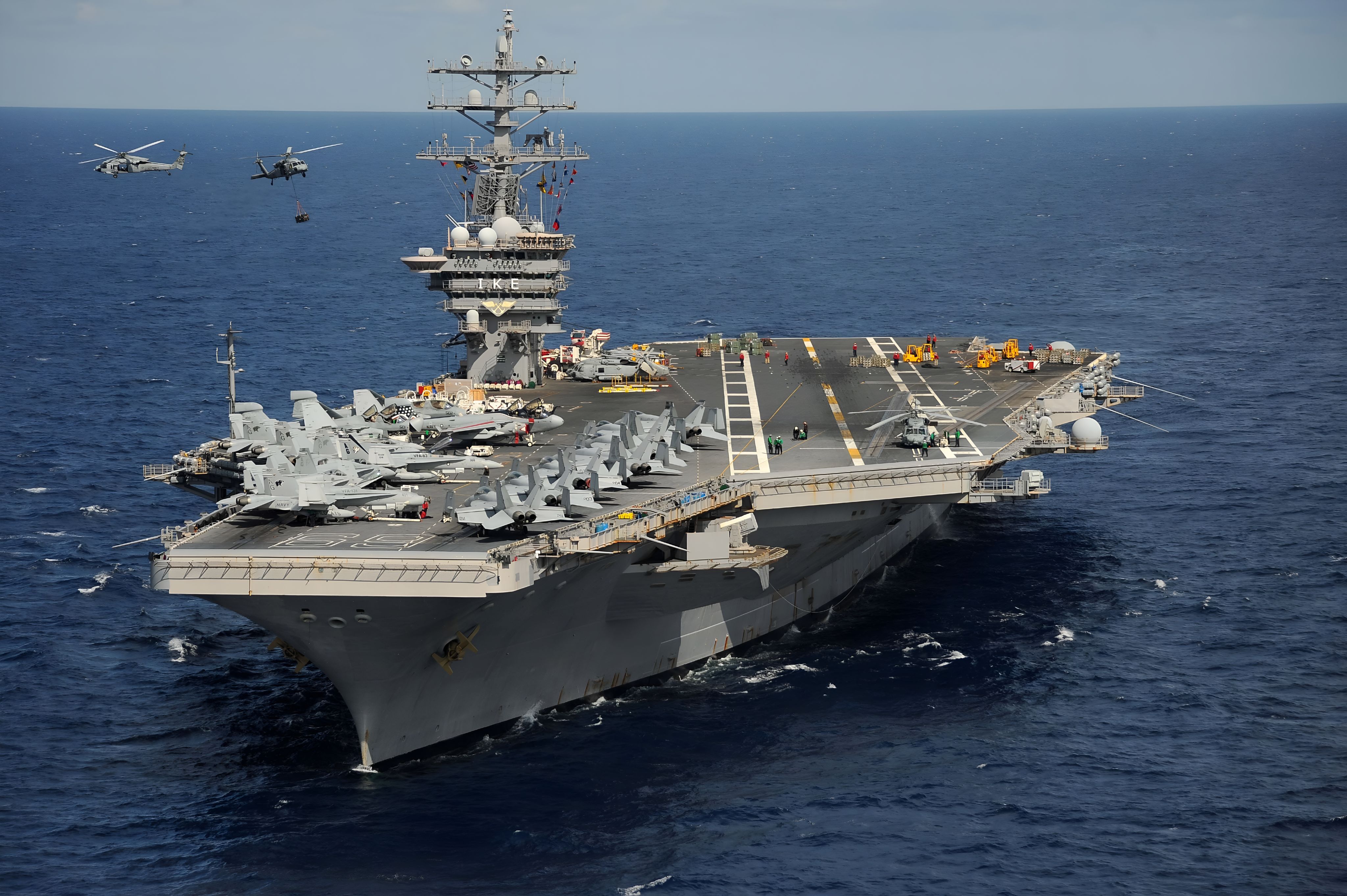
Personnel aboard the USS George H.W. Bush may remain deployed through the holidays and could spend as long as a year away from home. Families were told to prepare for that possibility during a Nov. 9 meeting in Norfolk, according to Military Times. The reported extension would push the nuclear-powered aircraft carrier well beyond the six-to-seven-month range typical of carrier deployments.

The duration has not been confirmed as a fixed return schedule. A Pentagon official said the Defense Department does not discuss “future or hypothetical movements” for operational-security reasons. That leaves thousands of personnel and their families facing an uncertain return after the Bush departed Norfolk on March 31 and completed an unusually long period without a port visit.
A second test of carrier endurance
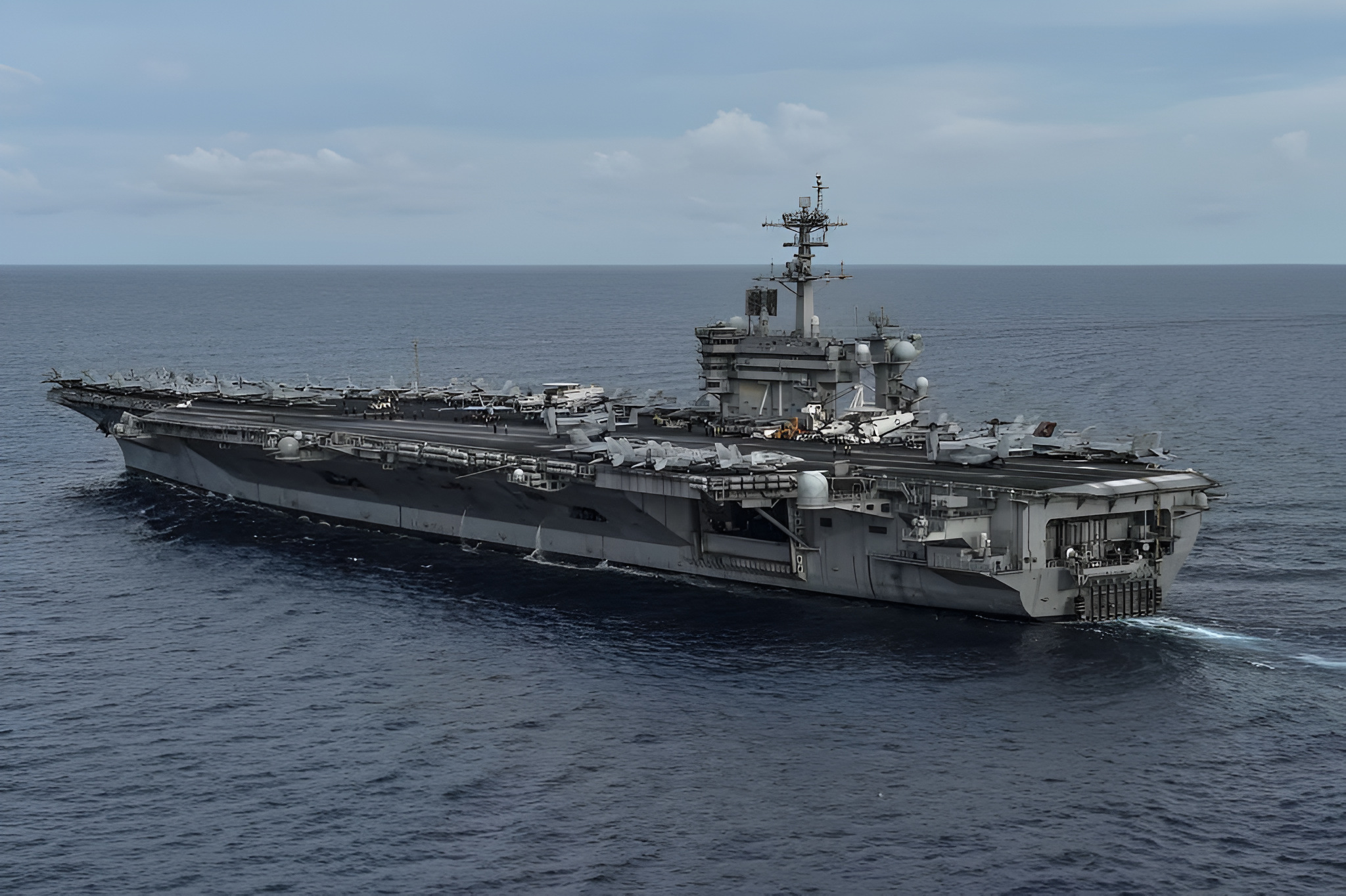
The closest comparison is the USS Abraham Lincoln, another Nimitz-class carrier. The Lincoln returned to San Diego on Oct. 8 after a 321-day deployment that began in November 2025. It spent 208 uninterrupted days at sea between stops in Guam and Oman, a span the Navy described as a modern-aircraft-carrier record.
The Bush approached that mark during its current deployment, spending 187 days without a port call before stopping in Thailand in early October. The four-day visit interrupted the at-sea stretch, but it did not resolve the larger issue: a possible 12-month deployment would place the ship’s personnel in the same broad endurance category as the Lincoln’s crew.
Nuclear propulsion can obscure the practical limits involved. A Nimitz-class carrier does not need conventional fuel for its main propulsion plant, allowing it to remain underway for long periods. Its roughly 5,000-person ship and air-wing workforce still consumes food, hygiene products, medical resources and other supplies. Aircraft, support equipment and shipboard systems also require sustained maintenance. Replenishment at sea can extend operations, but it cannot fully replace shore leave, predictable rest or contact with family.
Port calls therefore serve more than a logistical purpose. They provide opportunities to replenish perishable supplies, conduct work that is harder to complete underway and give personnel time away from the ship’s continuous watch and maintenance cycles. Removing or delaying those breaks transfers more of the deployment burden to shipboard storage, supply chains, work scheduling and habitability systems.
Newer hardware does not remove the human limit
The Bush is nearly 20 years newer than the Lincoln. Commissioned in January 2009, it incorporated upgraded data management, redesigned propellers, larger air-conditioning plants, communications changes, modified weapons elevators and a bulbous bow intended to reduce water resistance. Those improvements can affect efficiency, supportability and living conditions, but they do not make crew endurance open-ended.
The Lincoln, meanwhile, completed a Refueling and Complex Overhaul in 2017 after more than four years in the shipyard. That work included reactor refueling, aircraft-launch upgrades, extensive component replacement and hull maintenance. The comparison is therefore not between a modern ship and a neglected one. Both carriers represent heavily maintained, nuclear-powered platforms, yet both remain dependent on the same limited resource: people who need adequate sleep, nutrition, care and recovery time.
Concerns raised during the Lincoln deployment show how those limits can surface. Family members and lawmakers reported that personnel were overworked and lacked adequate hygiene supplies and nutrition. Acting Navy Secretary Hung Cao said the Lincoln carrier strike group experienced eight suicide attempts during the deployment. Those reports put habitability and mental-health support alongside propulsion and aircraft availability as readiness concerns.
A separate 2025 study involving 441 sailors identified inadequate rest and limited access to mental-health care among significant at-sea stressors. Nearly half of the surveyed sailors said stress-management services were inadequate. Other naval fatigue research has found that operational schedules and workloads often make mitigation difficult even when leaders recognize the problem.
The Bush’s newer air-conditioning, data and propulsion-related refinements may improve the environment in which its crew works, but no ship modification substitutes for recovery time. If the deployment reaches a year, its defining constraint will not be how long a nuclear reactor can keep the carrier moving. It will be how long the Navy can sustain the people operating, maintaining and supporting the ship without the normal rhythm of port access and a predictable return home.
| More aerospace and engineering stories, right in your MSN feed. Follow AMI on MSN |
By David Whitaker — Associate editor for AMI’s aerospace and drone systems desk, translating flight systems, aircraft programs, spaceflight, and UAV developments into accessible technical stories.