GM Ran 92,000 Virtual Crashes, Then Destroyed 50 2027 Silverados
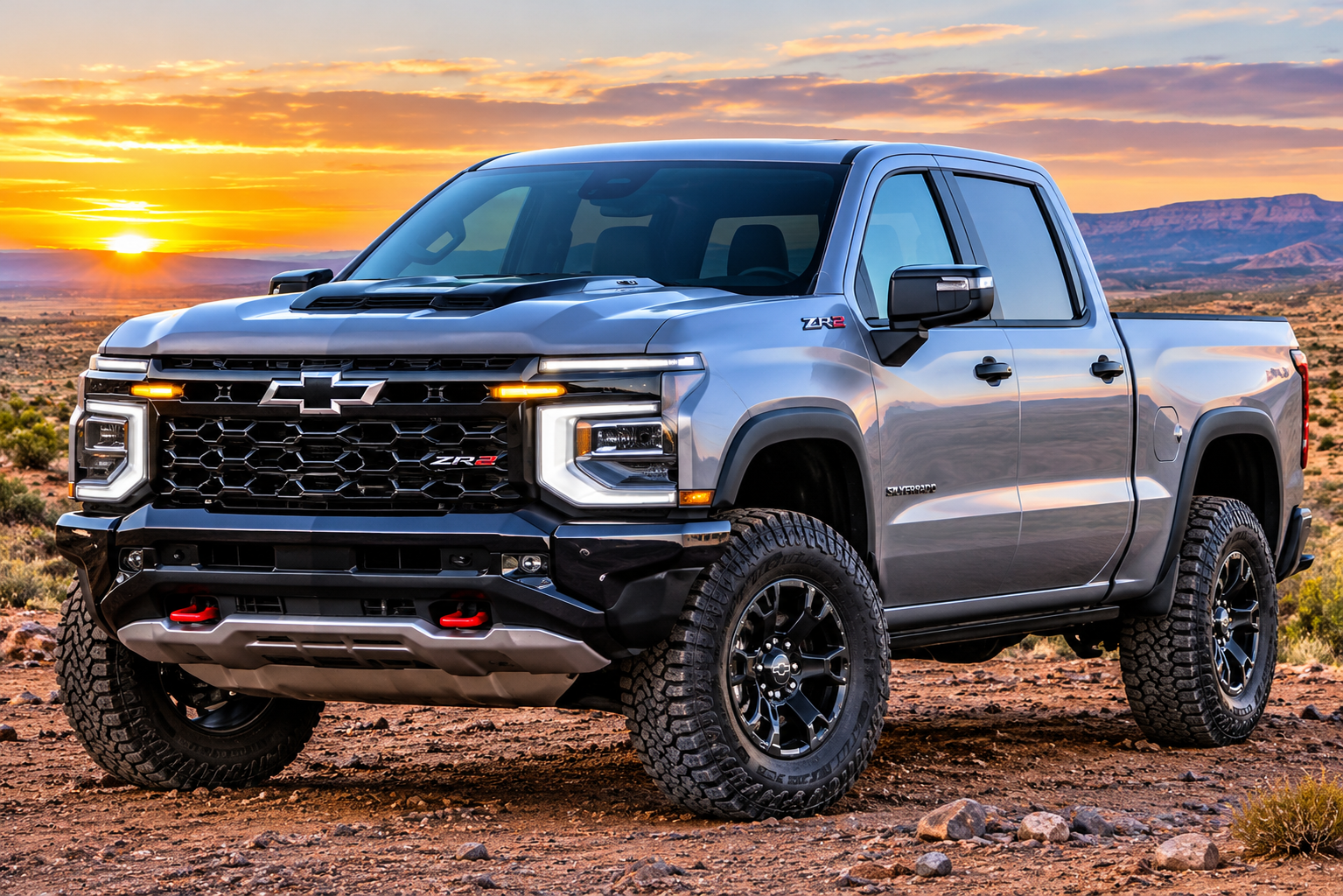
About 92,000 computer-simulated crashes shaped the redesigned 2027 Chevrolet Silverado 1500 before General Motors destroyed approximately 50 physical trucks to check whether its models matched real hardware. According to GM’s account of the safety program, simulations represented roughly 80% of the truck’s passive-safety engineering and generated nearly 2 petabytes of data.
The scale matters because a physical prototype can be crashed only once. A virtual truck can be rerun thousands of times while engineers alter material thickness, joint welds, structural details, occupant body sizes and seating positions. That gives the development team a wider design space to explore before it commits to tooling and a smaller fleet of expensive prototypes.
One crash, hundreds of configurations
One representative case involved a 40-mph frontal impact in which 40% of the Silverado’s width overlapped the barrier on the driver’s side. GM modeled hundreds of combinations involving both the truck structure and its restraint system before building physical prototypes.
The simulated driver was a 50th-percentile male, representing an average-size man. A 5th-percentile female dummy, representing a small woman, sat directly behind him. That arrangement puts front and rear-seat protection into the same test and forces engineers to manage different occupant sizes rather than optimizing the cabin around one standardized body.
The configuration follows the basic layout of the Insurance Institute for Highway Safety’s updated moderate-overlap evaluation. IIHS runs a vehicle into a stationary barrier at 40 mph with 40% overlap, using an average-size male dummy in front and a smaller dummy in the second row. Sensors measure potential injury forces while engineers assess occupant-compartment intrusion and the behavior of belts and airbags.
Offset impacts are a demanding structural problem because the load does not enter the entire front of the vehicle evenly. The body, frame and restraints must control deformation while maintaining occupant space and managing how quickly people decelerate. GM’s Silverado design uses boxed frame sections, tire deflectors, a collapsing steering column and a reinforced steel safety cage. The safety-cage work also accounted for changes associated with the optional panoramic sunroof.
Why 5,500 airbag tests mattered
GM also conducted 5,500 airbag tests, with as many as 100 simulations per airbag across three environmental chambers. Airbag performance depends on more than whether a cushion deploys. Its timing and interaction with the seat belt must work across different occupant positions and the range of conditions included in the test program.
That restraint work extended to the rear seat. GM added rear seatbelt pretensioners and revised the second-row structure after the 2026 Silverado received a marginal IIHS rating for rear-seat protection in frontal offset crashes. Pretensioners tighten a belt early in a collision, helping position an occupant before peak loads develop. The broader engineering challenge is to limit forward movement without concentrating excessive force on the chest.
GM used artificial intelligence to help debug its simulation models, locate structural hot spots and process tens of thousands of data points. The system supported engineers rather than replacing their judgment: numerical results still had to be interpreted, translated into design changes and compared with measurements from real vehicles.
Physical crashes remained the final check
Approximately 50 Silverado trucks were physically crashed at Building 61 of GM’s Milford Proving Ground in Michigan. Those tests checked the computer predictions and exposed complete vehicles to loads, manufacturing variation and component interactions that models are intended to reproduce.
The inspection continued after each impact. Technicians checked whether doors operated, fuel lines retained integrity, hazard and interior lights functioned, doors unlocked automatically and the OnStar emergency connection worked. These functions sit outside the headline numbers for structural deformation and dummy loads, but they influence evacuation and the vehicle’s response immediately after a collision.
The 92,000 simulations therefore did not make physical testing unnecessary. They allowed GM to examine far more structural, restraint and occupant combinations than a fleet of prototypes could practically cover, while the roughly 50 destroyed trucks served as the reality check. For the 2027 Silverado, the safety program’s central engineering bet was that a broad virtual search followed by targeted destructive testing could find problems earlier without surrendering the confirmation that only bent steel and instrumented dummies can provide.
| More aerospace and engineering stories, right in your MSN feed. Follow AMI on MSN |
By Robert McKinney — Editor-in-Chief for AMI’s automotive and mobility coverage, with a mechanical engineering background and a decade reporting on powertrain systems, EV innovation, and global vehicle manufacturing.