46,000-Cubic-Meter Gas Carrier Begins Commercial Service Using Ammonia Fuel
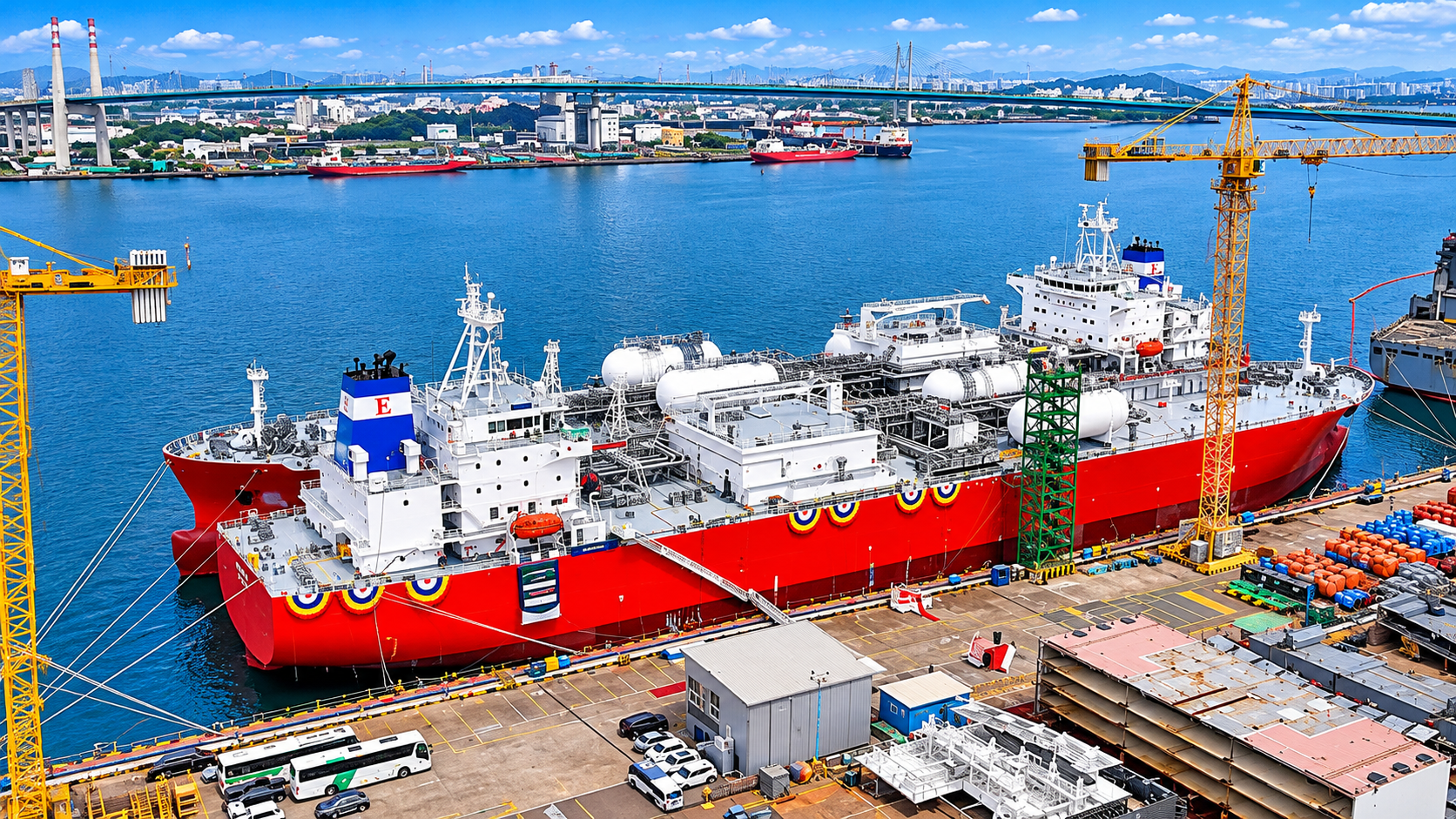
A 46,000-cubic-meter gas carrier has completed its maiden commercial voyage using ammonia fuel, moving its propulsion and fuel-supply systems beyond pre-delivery trials and into commercial service. The vessel can transport either ammonia or liquefied petroleum gas, giving the project a direct connection between the fuel carried and the machinery being validated.
The ship was developed through several years of collaboration among EXMAR, HD Hyundai Heavy Industries, classification society Lloyd’s Register, engine designer WinGD and Nord Gas Solutions, formerly Wärtsilä Gas Solutions. It is identified by the project partners as the first ammonia dual-fuel gas carrier to enter service. The available project account does not name the vessel or specify its maiden-voyage route.
That first trading voyage is a more consequential engineering milestone than another controlled demonstration. Gas and sea trials can confirm whether machinery meets defined test requirements, but commercial operation introduces changing engine loads, voyage demands and cargo operations. Data collected under those conditions can show how consistently the propulsion and fuel-supply systems perform when the vessel is doing its intended job.
Safety work preceded operation
Before delivery, Lloyd’s Register oversaw the design approval and Risk-Based Certification work. The verification program included Hazard Identification and Hazard and Operability studies, followed by gas trials and sea trials. These stages moved the project from examining potential hazards and operating deviations on paper to testing the installed systems aboard the completed vessel.
“This vessel is an important step forward for the safe adoption of ammonia as a marine fuel,” Lloyd’s Register CEO Nick Brown said at delivery. He attributed that progress to rigorous risk assessment, collaboration and attention to safety from the project’s outset.
Ammonia’s toxicity makes containment, monitoring and operating procedures central to marine-fuel applications. The project information confirms the structured hazard studies and trials but does not detail the safeguards used during routine operation. The commercial voyage therefore adds operating evidence to the earlier certification work without replacing the need for continued system monitoring.
A dual-fuel engine still uses pilot fuel
The installed propulsion technology also illustrates what “ammonia-fueled” means in current large marine engines. According to WinGD’s description of its X52DF-A engine installation, high-pressure ammonia injection is supplemented by a targeted pilot-fuel dose of about 5% at full load. HD Hyundai Heavy Industries’ Engine & Machinery Business Unit built the engine.
WinGD reported that factory testing confirmed results from its laboratory engine runs, including load handling, dynamic response and fuel efficiency comparable with its equivalent diesel-fueled engines. Commercial trading now tests those characteristics across less predictable operating cycles, where control response, fuel conditioning and coordination between the engine and fuel-supply equipment become as important as steady-state efficiency.
The project describes ammonia operation as enabling near-zero-emission shipping, but no measured emissions result from the maiden voyage has been published in the available account. A reduction of up to 90% compared with conventional fuel is a broader, conditional estimate associated with ammonia produced using renewable electricity; it is not a verified result for this ship. The small pilot-fuel requirement and the fuel’s production pathway also affect the complete emissions calculation.
The vessel’s value at this stage is operational rather than statistical. Its 46,000-cubic-meter capacity places ammonia propulsion in a working cargo platform, while its ability to carry ammonia or liquefied petroleum gas gives the operator cargo flexibility. More importantly for subsequent ships, recorded data from variable trading conditions can guide changes to engine operation, fuel-supply control and future vessel designs.
Pre-delivery analysis established the design basis, and gas and sea trials showed that the installed machinery could proceed to service. The maiden commercial voyage begins the longer test: whether those systems can deliver repeatable performance through changing loads, cargo operations and everyday trading demands.
| More aerospace and engineering stories, right in your MSN feed. Follow AMI on MSN |
By Jonathan Barrett — Editor for AMI’s future mobility and autonomous systems section, with two decades covering robotics, e-mobility, drone-vehicle convergence, and transport mechanical systems.