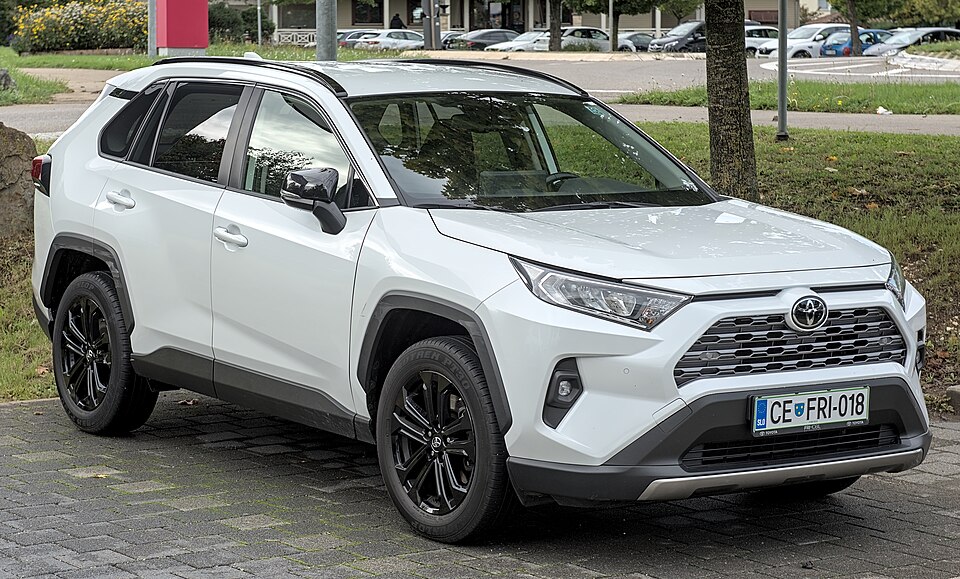
Courier’s Toyota RAV4 Hybrid Reportedly Reaches 300,000 Miles on Original Powertrain
300,000 miles is the headline figure, but the components reportedly still in the vehicle make this 2024 Toyota RAV4 Hybrid unusual. According to an account documenting high-mileage vehicles, the courier-operated sport-utility vehicle reached that mark with its original hybrid battery, gasoline engine and transmission.

The dashboard reportedly showed average fuel economy of 34.4 mpg and an estimated 386 miles of remaining range. Those figures suggest the RAV4 was still functioning as a working courier vehicle rather than merely reaching the mileage through a final demonstration run. Even so, this is one attributed ownership result, not a controlled durability test or a representative sample of RAV4 Hybrids.
Twice the battery warranty mileage
The original battery’s reported distance is notable because it is double Toyota’s warranty mileage limit. Under Toyota’s published warranty information, the high-voltage battery in a 2024 hybrid is covered for 10 years or 150,000 miles, whichever comes first.
Other warranty boundaries were crossed much earlier. Toyota lists eight years or 100,000 miles of coverage for specified hybrid-related components, while powertrain coverage for the engine and transmission is 60 months or 60,000 miles. Warranty limits are coverage terms rather than predictions of when parts will fail, but they provide useful scale: the reported engine and transmission traveled five times the powertrain warranty’s mileage limit.
If the vehicle averaged 60 mph over its accumulated distance, 300,000 miles would equal roughly 5,000 operating hours. That is only an estimate, but it illustrates the sustained use involved. The RAV4’s displayed 34.4-mpg average was about 90% of its cited 38-mpg highway rating, a plausible result for a vehicle assigned primarily to high-speed travel.
Why the highway duty cycle matters
The account characterized the courier use as “100% highway mileage.” That operating pattern is central to interpreting the result. Long, steady trips generally keep the gasoline engine warm, reduce the number of cold starts per mile and expose the powertrain to more consistent loads than repeated short journeys.
The hybrid system also works differently on a highway than in dense urban traffic. Stop and go driving repeatedly calls on the battery and electric motors for launch assistance, then sends energy back through regenerative braking. Steady cruising can involve less frequent battery cycling. Research on electric-drive batteries has found that degradation patterns vary with duty cycle, ambient conditions and driving behavior, so mileage alone cannot describe every source of battery wear.
The courier pattern may have another favorable characteristic: accumulating distance quickly can produce a large odometer number without the same elapsed time as a privately owned vehicle driven over many years. Battery aging includes both cycling effects and calendar effects. This RAV4 therefore demonstrates survival under intensive, highway-heavy use, not necessarily under prolonged storage, repeated short trips, extreme climates or a typical mixed commute.
High mileage still requires scheduled service
Keeping the original major components does not mean operating the vehicle without maintenance. Toyota’s schedule calls for inspection of the high-voltage battery cooling intake filter every 5,000 miles and cleaning every 20,000 miles. Following that schedule through 300,000 miles would involve 60 inspections and 15 cleanings.
That filter supports airflow used to manage battery temperature. Restricted cooling can alter the thermal conditions experienced by the pack, making the service item more consequential than its size suggests. The reported mileage does not establish which individual services this vehicle received, but Toyota’s schedule shows the maintenance burden associated with reaching such a distance.
The inverter cooling circuit also has long-interval work. Its first coolant replacement is scheduled at 150,000 miles, followed by replacements every 50,000 miles. A RAV4 maintained to that interval would be due for its fourth inverter-coolant replacement at 300,000 miles.
The result is consequently best read as a high-mileage durability case with unusually favorable boundaries. The original battery, engine and transmission reportedly endured about 5,000 estimated operating hours and twice the battery warranty mileage, while the vehicle’s steady highway assignment reduced several stresses associated with short-trip and stop and go use. Its most useful lesson is not that every RAV4 Hybrid will reach the same number, but that duty cycle, thermal management and routine service remain inseparable from any meaningful longevity claim.
| More aerospace and engineering stories, right in your MSN feed. Follow AMI on MSN |
By Thomas Caldwell — AMI’s senior editor for mechanical and mobility engineering, covering vehicle electronics, systems integration, electrification, chassis systems, propulsion, and safety policy.