Michael Pick Turns Dead BMW i3 Into Pickup for Under $8,000
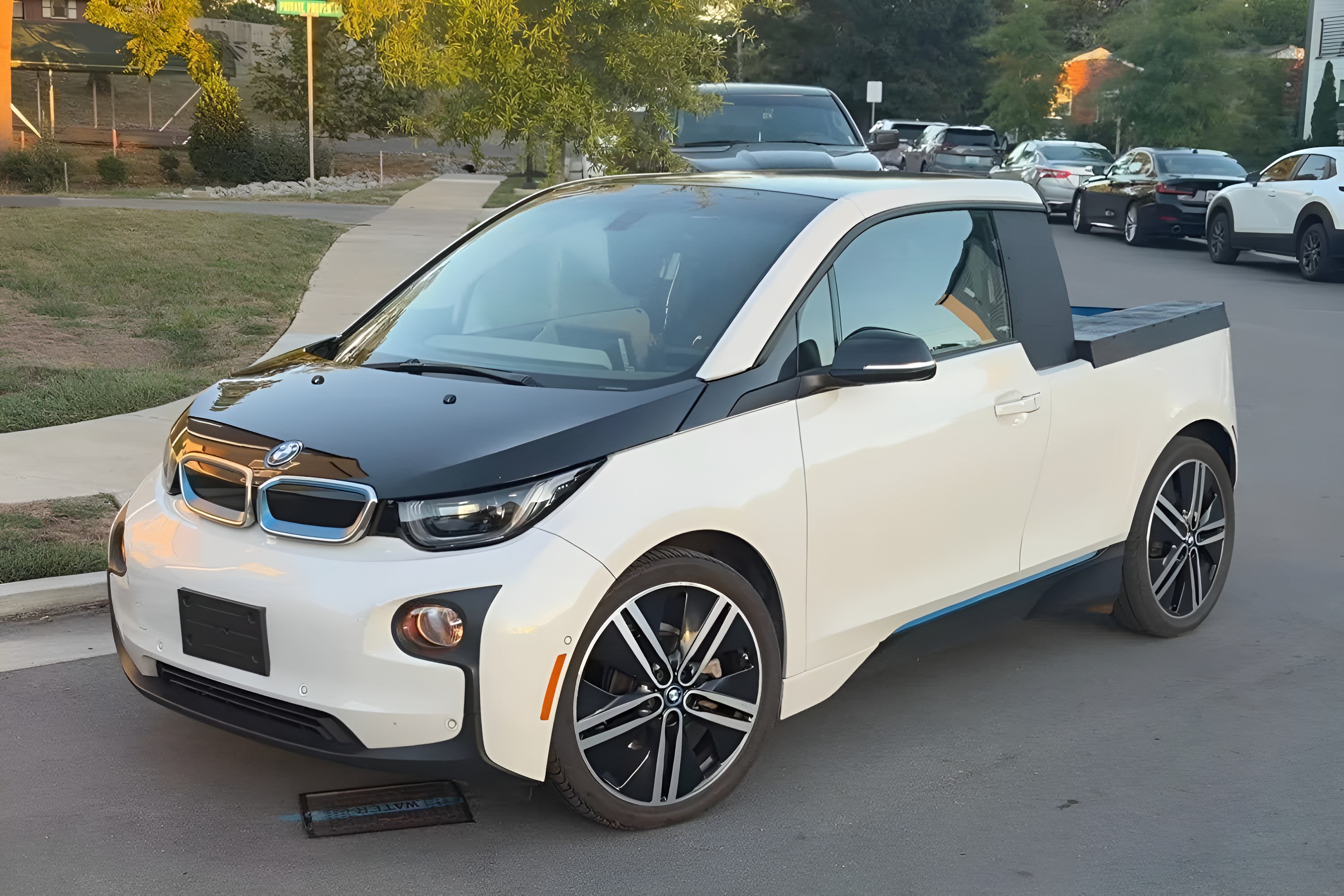
A battered, non-running BMW i3 became a lumber-carrying miniature pickup for less than $8,000, including the donor car. Michael Pick’s completed conversion delivers the basic open-bed utility he wanted at a fraction of the cost of a commercial electric truck, but it required cutting the BMW’s composite passenger structure, fabricating a weather-resistant cargo area and retaining a gasoline engine.
Pick began the project after high gasoline prices made replacing his Ford Ranger appealing, while available electric pickups remained beyond his budget. According to MotorBiscuit, he set a ceiling of $10,000 and pursued more than 300 miles of total range. That target was not battery-only range: Pick deliberately selected the BMW i3 REx, whose small two-cylinder gasoline engine generates electricity for the high-voltage battery rather than driving the wheels directly.
He bought the used BMW sight unseen through an online auction. The i3 arrived unable to run, but replacing its 12-volt battery restored the displays and allowed the project to proceed. That relatively modest repair turned the apparently dead car into a viable conversion platform, although the work that followed went far beyond fitting a conventional truck bed.
Carbon fiber changed the fabrication problem
The i3’s unusual construction made the body conversion more involved than cutting the roof from an ordinary steel hatchback. Pick removed the rear roof and hatch using a specialized diamond blade intended for abrasive composites. The project then needed a new rear cab enclosure and a structure to support the cargo area.
Carbon-fiber construction brings different repair and modification requirements from conventional stamped metal. I-CAR’s BMW i3 repair guidance explains that damage to the carbon-fiber passenger cell is assessed against defined limits and that replacement work uses specified cut locations, backing pieces, adhesives and specialty tools. Pick’s conversion was custom fabrication rather than a factory collision repair, but those procedures illustrate why the i3 cannot be treated like a steel-bodied pickup.
For the back of the passenger compartment, Pick formed a weather-sealed wall from ABS plastic shaped around the outline of the original rear-door glass. A steel frame connected the new bed to the remaining vehicle structure. Some original components also had to stay because the BMW’s networked electronics expected locks, lights and data connections to remain present.
Removing the rear portion of the passenger cell changes a structure engineered and tested as a complete system. No crash-test result or payload rating is available for the modified vehicle. Its demonstrated utility is therefore narrower than that of a certified production pickup, which arrives with validated occupant protection, load limits and durability targets.
A wooden bed had to protect electronics and permit service
The cargo bed was made from plywood, treated with penetrating marine epoxy and covered with a bed-liner coating. Waterproofing was more than a cosmetic concern: equipment that had previously lived within the enclosed body was now closer to an open cargo area exposed to rain, wash water and debris. Pick sealed seams and protected the altered composite edges, while the bed was designed to remain removable for access to the range-extender engine beneath it.
That service access exposes the central tradeoff in the project. The REx configuration supports longer total travel than the battery alone, but it also preserves an internal-combustion engine and its associated fuel and maintenance requirements. The conversion is electrically driven, yet it is not a battery-only pickup when operated to meet the longer range target.
The project total also covered a replacement windshield and an upgraded 12-inch display with Apple CarPlay. Even with those additions, Pick reported spending less than $8,000 overall, comfortably below his original $10,000 limit. The figure reflects his specific donor vehicle, labor and fabrication choices rather than a repeatable conversion price for every i3.
The finished bed carried lumber
Pick demonstrated the finished cargo area by driving to Home Depot and loading long wooden planks into the bed. Adjustable aluminum L-track provided tie-down points. The trip showed that the conversion could perform the light hauling task that motivated it, though it did not establish a formal payload capacity or production-level durability.
Pick said filling the vehicle with both electricity and gasoline cost $10, while charging the high-voltage battery without gasoline cost $4. Those are his reported costs for this vehicle and charging situation, not universal operating figures.
The result is a functional, low-cost mini-pickup built around an unconventional mix of carbon fiber, plywood, steel, ABS plastic, battery propulsion and gasoline-assisted range. Its most consequential design feature may be the removable bed: the same component that creates the truck’s utility must come off when the retained gasoline engine needs service.
| More aerospace and engineering stories, right in your MSN feed. Follow AMI on MSN |
By Thomas Caldwell — AMI’s senior editor for mechanical and mobility engineering, covering vehicle electronics, systems integration, electrification, chassis systems, propulsion, and safety policy.